Transforming Death Claims Handling: How CBUS Super Tackled Super’s Most Challenging Process


#30. Cohosts Neil Benson and Sarah Penn chat with Kerry Vogel, Head of Insurance Claims, Performance and Delivery at CBUS Super.
Today's conversation focuses on how CBUS Super responded to major failings in handling death claims by moving beyond surface fixes and fundamentally redesigning the process.
The central argument: Australian super funds create unnecessary complexity and distress for grieving families by relying on outdated, paperwork-heavy systems, and CBUS has proven it’s possible (and necessary) to remove those frictions even within tight regulatory constraints.
A key theme that emerged was how stripping away non-binding and lapsing nomination options, and instead prioritizing a single, digital-first, non-lapsing binding nomination, can mean faster, simpler outcomes, anchored in clear trust deed rules and tailored to real member behaviours. The discussion explored why simply throwing more staff at claim backlogs doesn’t work and how only deep, systemic change can build genuine trust with members. Several points were raised, including the regulatory grey areas around nominations, the human cost of delays, and the need to make processes as straightforward, and as empathetic, as possible.
Who should listen
- Claims and operations leaders in Australian super funds struggling with legacy processes and regulatory pressure
- Product or legal professionals considering trust deed reform or digital transformation of member nominations
- Trustees and fund executives wary of adopting bold procedural changes post-regulatory action
Guest: Kerry Vogel
Highlights
- Kerry Vogel emphasizes that death claims are both a crucial responsibility and a complex challenge for superannuation funds, highlighting the emotional weight behind these processes.
- The podcast reveals how Kerry led efforts at CBUS Super to overhaul the death claims process, aiming to simplify and enhance member understanding of their benefits.
- A significant point discussed was the need for clarity in binding nominations, as many members mistakenly believe their nominations are more definitive than they are, illustrating a gap in financial literacy.
- Kerry's approach includes not just streamlining procedures but also ensuring that the claims team maintains empathy, recognizing the human stories behind each claim.
- The conversation touched on the importance of regulatory compliance while seeking innovative solutions to make the claims process more efficient and user-friendly.
- Kerry stresses the continuous nature of improvement, suggesting that the claims process will always evolve, reflecting the need to stay responsive to member needs and industry changes.
Chapters
00:00 Examining superannuation challenges
04:23 Challenges in Death Claim Processing
10:56 Ensuring valid member nominations
15:01 Dealing with death claim objections
18:54 Discussing estate distribution process
21:00 Addressing nominations and trustee discretion
24:17 Ensuring policy transparency
28:26 Issues with binding nominations
31:40 Implementing a new claims process
35:52 Simplifying call center processes
38:09 Analyzing and improving death claims
40:01 Discussing problem-solving approaches
That Super Show
That Super Show is the most downloaded podcast for Australian superannuation professionals. Sarah and Neil cover the issues, debates and decisions shaping the industry - without the spin.
Subscribe to the show wherever you listen to podcasts and don't forget to leave us a rating and review.
- Visit That Super Show website and become a newsletter subscriber
- Email hello@thatsuper.show if you've got a topic you'd like us to cover or a guest suggestion
- Follow That Super Show on LinkedIn
- Follow That Super Show on YouTube
Your Cohosts
Sarah Penn
Sarah Penn is the CEO and founder of Mayflower Consulting, an Australian financial services consultancy specialising in product governance, PDS management, and product operating model design. Her team works with super funds, fund managers, and investment platforms across Australia.
- Connect with Sarah on LinkedIn
- Follow Mayflower Consulting on LinkedIn
- Visit Mayflower Consulting website
Neil Benson
Neil Benson is the global chief product officer at ChandlerCX, where he leads a team focused on intelligent customer messaging for regulated organisations, including superannuation funds, banks, insurers, utilities and public sector organisations. His AI startup, Novagentic, was acquired by ChandlerCX in February 2026.
Mentioned in this episode:
Chandler CX Digital Forms
You know that eight-page PDF form that scares off half your members before they finish page two? We turn it into a smart, mobile-first digital form. Prefilled, validated in real time, signed on the spot and straight through processed into your registry. https://www.chandler.com.au/cx-receive/receive
00:00 - Untitled
00:04 - Redesigning Claims Processes in Super Funds
00:33 - Introduction to Claims Handling Challenges
13:23 - Understanding Claims Staking in Death Claims Process
31:00 - Transforming the Claims Process
35:38 - Empathy in Claim Processing
Sarah Penn 00:00:00
Death claims are one of the most consequential things a Super fund does, and one of the messiest.
Sarah Penn 00:00:04
Today we're talking to Kerry Vogel, head of insurance, claims, Performance and Delivery at cbus, about what it takes to redesign a claims process from the ground up.
Sarah Penn 00:00:13
Let's get into it.
Neil Benson 00:00:15
Welcome to that super show, the podcast where we talk about all things super from the inside.
Neil Benson 00:00:20
I'm Neil Benson, Chief Product Officer at Chandler cx.
Sarah Penn 00:00:23
And I'm Sarah Penn, CEO of Mayflower Consulting.
Sarah Penn 00:00:26
Each week we unpack what's changing in the industry, what funds are wrestling with and how tech and reg are shaping the landscape.
Neil Benson 00:00:33
Sometimes we bring in expert guests, but mostly it's just us having a real conversation about how super is working and what could make it even better.
Sarah Penn 00:00:41
Let's get into It.
Sarah Penn 00:00:46
Welcome to that Super Show.
Sarah Penn 00:00:47
Hi, Neil, how you going?
Kerry Vogel 00:00:49
I'm great.
Neil Benson 00:00:49
Sarah, how's it going with you?
Sarah Penn 00:00:51
I am very good.
Sarah Penn 00:00:52
And we're joined today by Kerry Vogel from cbus, who is going to talk to us about claims handling and fixing it, which we're very excited.
Sarah Penn 00:01:01
So welcome, Kerry.
Kerry Vogel 00:01:03
Thank you, Sarah, for having me today.
Sarah Penn 00:01:05
Pleasure.
Sarah Penn 00:01:06
Why don't we start with telling us a bit about yourself and how did you come to agree to take on the job of trying to sort out cbus death claims handling?
Kerry Vogel 00:01:18
That's an interesting question, isn't it?
Kerry Vogel 00:01:20
So, hi, everybody.
Kerry Vogel 00:01:22
I'm Kerry Vogel.
Kerry Vogel 00:01:23
I'm the head of Claims, Performance and Delivery at cbus.
Kerry Vogel 00:01:26
I've been at CBUS for almost two years now, and if you work that back then, you'll realise that I joined at a time when things were quite challenging at the fund.
Kerry Vogel 00:01:36
Coming to cbus for me was something that I saw as an opportunity.
Kerry Vogel 00:01:40
And I know that probably sounds a bit weird for some people, and I do recall when I had let some colleagues and other people know that I was moving to CBUs, they said, are you crazy?
Kerry Vogel 00:01:54
Why would you do that?
Kerry Vogel 00:01:56
But for me, I've always taken on challenges where I felt like I was very passionate about making things right and adding value and implementing change.
Kerry Vogel 00:02:11
So for me, it was an opportunity.
Kerry Vogel 00:02:14
I didn't see it as a negative decision.
Kerry Vogel 00:02:16
I obviously expected that there would be challenges, but sometimes a challenge can lead to some really, really good opportunity and some really great things.
Neil Benson 00:02:28
Yeah, well, an opportunity is certainly one way to characterize the situation at the time.
Neil Benson 00:02:33
I recall, you know, a lot of bad press, Senate hearings and all sorts of shenanigans going on.
Neil Benson 00:02:39
And it wasn't just one fund.
Neil Benson 00:02:41
There was.
Neil Benson 00:02:41
There was A few funds in the, in the regulators crosshairs at that point.
Neil Benson 00:02:45
Some have come through this better than others.
Neil Benson 00:02:47
I know some funds just throw lots of people at the problem to try and clear backlogs and things.
Neil Benson 00:02:52
And that's, I guess that's one way to try and solve the situation.
Neil Benson 00:02:55
But as far as I understand it, seacos has taken quite a different approach.
Neil Benson 00:02:58
Can you outline, you know, the situation you stepped into and you know what your first reaction to that was?
Kerry Vogel 00:03:04
Yeah, I guess I'd got a bit of a distinct advantage when I joined the fund because I wasn't in the significant detail of having to respond to members of beneficiaries that were in, you know, this very challenging environment.
Kerry Vogel 00:03:21
So I had the opportunity to really step back and take some time to think, okay, what is the actual problem here?
Kerry Vogel 00:03:29
And having come from an operational environment as well, very similar to CBUs, the challenges are not necessarily different at CBUs compared to other funds.
Kerry Vogel 00:03:39
It was that there was some specific things about the data that led me to think, oh, what is it that we could potentially do here?
Kerry Vogel 00:03:50
So the fund generally is significantly male and young.
Kerry Vogel 00:03:56
There's some low financial literacy in relation to superannuation.
Kerry Vogel 00:04:02
So young men don't care about super.
Kerry Vogel 00:04:05
They're out on work sites and they're doing their thing.
Kerry Vogel 00:04:09
So men paying attention and making a death benefit nomination is the furthest thing from their mind.
Kerry Vogel 00:04:15
So looking at the CBUS data, the binding nomination data is very, very low.
Kerry Vogel 00:04:23
So that then leads to, okay, so what does that mean for a death claim?
Kerry Vogel 00:04:26
How does that play out?
Kerry Vogel 00:04:27
So I put that aside and park that.
Kerry Vogel 00:04:30
And then the other process that the industry has lent into is claim staking.
Kerry Vogel 00:04:37
So we generally lent into this process a number of years ago to provide some comfort and I would say security for the trustee to make sure they're making a death claim payment to the right person.
Kerry Vogel 00:04:53
And whilst that is very helpful for the trustee, it can mean that the process is quite lengthy for claimants, particularly as the Australian family is not what it used to be and there's lots of family challenges and there can be multiple children, partners, relationships.
Kerry Vogel 00:05:13
The other piece was going back to the nomination side of things.
Kerry Vogel 00:05:17
It's prescribed that it's on paper.
Kerry Vogel 00:05:20
It has to be witnessed by two people that aren't beneficiaries to the, to the nomination and signed on the same day and then emailed in or mailed in because you need a wet signature.
Kerry Vogel 00:05:33
So that in and of itself is challenging, particularly today.
Kerry Vogel 00:05:37
People don't do paper, do you?
Kerry Vogel 00:05:38
When was the last time you posted.
Sarah Penn 00:05:40
A paper if I can help it.
Kerry Vogel 00:05:41
Exactly.
Kerry Vogel 00:05:43
So young people again it's just like that's the furthest thing from their mind and that's like you want them to put a piece of pen to paper even let alone the next steps that's required.
Kerry Vogel 00:05:53
So it's like how do we increase that?
Kerry Vogel 00:05:55
What can we do?
Kerry Vogel 00:05:58
Very early on in the piece I looked at the regulations and we're in a very regulated environment superannuation.
Kerry Vogel 00:06:05
It's like so how can we make this process better working with the regulations we have and increasing the nominations from a binding perspective.
Kerry Vogel 00:06:16
And I sought obviously internal legal advice initially to work through that.
Kerry Vogel 00:06:20
So before I'd gone anywhere it was off the side of my desk working with people close to me.
Kerry Vogel 00:06:27
How can we solve this and start start unpacking it.
Kerry Vogel 00:06:31
So we looked at what else is who else is doing things in the market.
Kerry Vogel 00:06:35
There were a couple of funds doing a few different things in the market but not many.
Kerry Vogel 00:06:40
So we looked at the online bonding nomination process and non lapsing that was one of the solutions but only part of the solution because you still to increase those to get the result.
Kerry Vogel 00:06:54
So you've got to get a high level of take up of that.
Kerry Vogel 00:06:58
So probably around my targets around 50% to try and increase our nomination rate to 50.
Neil Benson 00:07:04
We should be able to nomination rate in the single digits.
Kerry Vogel 00:07:09
Yes they are.
Neil Benson 00:07:12
From there to 50 is a big stretch.
Kerry Vogel 00:07:14
I look at things from the point of view of like why not.
Kerry Vogel 00:07:19
Because if you nudge and encourage and as part of your contact with members that you and you can see on their profile when we're in contact with a member that they haven't got a nomination is to do it then and then if it's going to be it'll be on our app, it'll be on our website.
Kerry Vogel 00:07:37
So do it there and then.
Kerry Vogel 00:07:40
We're in a pretty unique situation at CBUS too.
Kerry Vogel 00:07:42
We have some great opportunities to have contact with members that are a little bit different to other funds.
Kerry Vogel 00:07:48
So we have a front counter service in every capital city.
Kerry Vogel 00:07:52
So if members come into our offices and talk to and ask questions about their super might want to do withdrawal or whatever it's about that as well.
Kerry Vogel 00:08:00
Hey hey.
Kerry Vogel 00:08:01
We can see you don't have a binding nomination and explain and then we have workplace coordinators that can also go out to members houses or on work sites and things like to encourage separate to that whenever someone contacts our contact centre.
Kerry Vogel 00:08:18
Hey we can see haven't got a nomination in place so all of the touch points are an opportunity to increase.
Kerry Vogel 00:08:24
Our non binding nomination process at the moment is digital and we have about 40% of members with a non binding nomination.
Kerry Vogel 00:08:32
So for me it's not unreachable.
Kerry Vogel 00:08:34
So we'll be essentially replacing that type with a non lapsing binding one.
Kerry Vogel 00:08:40
And we know there's a direct correlation between a binding nomination and the death claim duration.
Kerry Vogel 00:08:45
So that's one part.
Neil Benson 00:08:47
Can I ask a question, Kerry, about the regulations there?
Neil Benson 00:08:49
Because I've read through the SIS act specifically in terms of nominations and lapsing, which is typically a three year nomination that is binding does require wet signature, two witnesses, everything has to be dated correctly, the witnesses have to be typically their beneficiaries and there's a whole bunch of rules around it and that's all enshrined in the SIS act.
Neil Benson 00:09:10
And then in the SIS regulations there's this mention of a non lapsing binding nomination which doesn't need all that rigmarole.
Neil Benson 00:09:19
And it seems to me that there's a slight conflict between the CIS act on one hand, CIS regulations on the other.
Neil Benson 00:09:26
And it's almost like creating a trust, creating a lapsing binding nomination and it's almost as if the law got it run the wrong way.
Neil Benson 00:09:34
It's harder to create a lapsing nomination than it is to create a non lapsing nomination.
Neil Benson 00:09:39
Do you think we were speculating on this at the Future Fund Admin Forum whether there was a mistake in how these things were drawn up, whether the law has got things run the wrong way?
Neil Benson 00:09:50
Do you think that's possible?
Kerry Vogel 00:09:52
I think sometimes, particularly with super regs, that there's a delay in moving with the community and the community expectations and the community's understanding of things and what we need to do to support members.
Kerry Vogel 00:10:08
I mean the banking industry moves with much more agility with technology.
Kerry Vogel 00:10:13
These things, particularly the ability to operate and do a non lapsing binding is definitely not specific to the specific regulation in the SIS Act.
Kerry Vogel 00:10:23
And of course as part of our analysis of this, we've sought internal and external legal advice to make sure we're operating in the right environment.
Kerry Vogel 00:10:31
The other thing that's really important here is that people get very concerned when you're doing something online compared to doing it on a piece of paper.
Kerry Vogel 00:10:40
Now I don't know why people think that if they've got a form that's been witnessed that that could be done with less coerc or vulnerability than it could be done online.
Kerry Vogel 00:10:52
It's an interesting thing.
Kerry Vogel 00:10:53
People do get nervous when they think something's been done online.
Kerry Vogel 00:10:56
But there's other checks and balances that we're putting in place in relation to making sure or having a high level of comfort that the person that has made that nomination is the actual member.
Kerry Vogel 00:11:10
And then separate to that at death, we test the validity of that nomination.
Kerry Vogel 00:11:16
So if a long time has passed between when a nomination was made, all the checks and balances are in place to see if potentially if the member was ever divorced, if there was a new child, another child born.
Kerry Vogel 00:11:29
But the other piece that gets spoken about as well is did the member have capacity to make that nomination at the time?
Kerry Vogel 00:11:37
So then when we look at our death claim process, we will have things in there like how soon did the nomination get made to when the member passed, what did the member die of to provide that level of comfort.
Kerry Vogel 00:11:52
And then we're also putting an MFA as part of that making a nomination, treating it like a financial transaction.
Kerry Vogel 00:11:59
Whilst there's no financial attribution to that particular process, there is a higher level of risk.
Kerry Vogel 00:12:06
So we're putting MFA.
Kerry Vogel 00:12:08
So member will log in and they'll be MFA'd.
Kerry Vogel 00:12:10
Member will wanna update, create, revoke a nomination, they'll be MFA'd.
Kerry Vogel 00:12:15
So there's a couple of steps there.
Kerry Vogel 00:12:18
I feel that the ease of making the nomination compared to the risk of someone having coercion compared to the membership is low.
Neil Benson 00:12:26
Yeah, okay.
Neil Benson 00:12:27
That's a really good risk assessment that you've undertaken there to try and think what can we do to make these things easier, smoother and at the same time put in some checks and balances to weigh up the risks later.
Neil Benson 00:13:00
You mentioned claim staking earlier and I've worked in claims a little bit, but not, not very extensively.
Neil Benson 00:13:06
And I thought claim staking was some kind of obligation that trustees had to undertake.
Neil Benson 00:13:11
But what you've outlined is it's not.
Neil Benson 00:13:14
It's something that the trustee has decides whether or not they need to do on a, maybe on a case by case basis or on a policy basis for those not involved a lot in claims management.
Neil Benson 00:13:23
Can you help us understand what claims staking is and why it takes so long and what the risks are they're trying to be mitigated?
Kerry Vogel 00:13:30
Sure.
Kerry Vogel 00:13:31
So it's been in place for a long time and generally a fund will have chosen to consider claims taking as part of their death claims process.
Kerry Vogel 00:13:41
And it's generally where there is either no nomination in place or a non binding nomination in place because a non binding nomination's not binding on the trustee.
Kerry Vogel 00:13:55
So by the sheer nature of claim staking, if someone Passes with, with that nomination type, it's the onuses on the trustee then to seek out anybody who may have a claim on that member's benefit.
Kerry Vogel 00:14:11
And that can involve a process where.
Kerry Vogel 00:14:14
Or it does involve a process where we write out to interested parties and we will afford them 28 days to respond.
Sarah Penn 00:14:24
How do you know who's an interested party?
Kerry Vogel 00:14:26
Yeah, well, this is the thing.
Kerry Vogel 00:14:27
This is where it gets a bit interesting because sometimes what will happen is somebody will make.
Kerry Vogel 00:14:32
Will fill a claim form in or make a phone call and say so and so's died.
Kerry Vogel 00:14:35
That might not necessarily be an actual beneficiary or a potential beneficiary, but that therein lies the starting of the process.
Kerry Vogel 00:14:43
So based on the information that is generally provided, which is the first thing will be the death certificate.
Kerry Vogel 00:14:48
And you'll have if there was a spouse, if there was a divorce, if there were children.
Kerry Vogel 00:14:52
So then you start going, okay, no nomination, spouse, children, go right to all of them.
Kerry Vogel 00:14:58
And then you start going down that path.
Kerry Vogel 00:15:00
And then what happens is sometimes the floodgates open and you get a whole raft of other people contacting you as well.
Kerry Vogel 00:15:06
So in and of itself, the process takes generally end to end for one claim staking cycle, about six weeks by the time you write, receive and write back again, potentially.
Sarah Penn 00:15:18
And is it one claim staking cycle?
Sarah Penn 00:15:22
Can there be more than one?
Kerry Vogel 00:15:23
There could be.
Kerry Vogel 00:15:25
Which again, depending on the nature of the affairs of the person that's passed away and their relationships that they've had, it can.
Kerry Vogel 00:15:36
You might all of a sudden receive a notice from another party through the claim staking process and then they have to be afforded the same 28 days or the trustee can make a decision, a proposed decision, and say, okay, we're proposing to make this payment to so and so.
Kerry Vogel 00:15:55
And then we let everybody know that that's what we're doing.
Kerry Vogel 00:15:58
And then they have an opportunity to object.
Kerry Vogel 00:16:01
And then the death claim objection process falls into line and that process lasts 45 days because it then becomes part of an IDR death claim objection process.
Kerry Vogel 00:16:12
So it can be very protracted.
Kerry Vogel 00:16:15
Now in all of this, the beneficiaries will all be going, oh my God, why is this taking so long?
Sarah Penn 00:16:21
Yeah, where's my money?
Kerry Vogel 00:16:23
Where's my money?
Kerry Vogel 00:16:24
Yeah, so that's where I started with if I picked apart the whole process of where is the biggest impact that we could have where somebody doesn't have a nomination?
Sarah Penn 00:16:36
Yeah.
Kerry Vogel 00:16:37
And we know as well, coming back to the superannuation literacy piece, but not just at CBUs, but I think more broadly in industry.
Kerry Vogel 00:16:47
If a member thinks they've signed a form, they think that's the thing that's binding.
Kerry Vogel 00:16:53
They just, it's done.
Sarah Penn 00:16:55
I still remember being surprised when I was, when I moved into Superwood in my sort of my mid-20s.
Sarah Penn 00:17:00
I still remember being surprised that you could fill out a form and then the trustee and telling all my friends and that the trustee could basically ignore it because it was just a suggestion.
Kerry Vogel 00:17:11
It's a suggestion.
Kerry Vogel 00:17:12
How can you fill out a form?
Sarah Penn 00:17:13
That's a suggestion.
Kerry Vogel 00:17:14
Exactly.
Kerry Vogel 00:17:15
So there's that piece as well.
Kerry Vogel 00:17:17
So the whole looking at the whole death claim experience holistically was through the lens of simplicity.
Kerry Vogel 00:17:28
So how do we make all of the aspects simple?
Kerry Vogel 00:17:32
So by having a non lapsing, binding nomination and having no other nomination on offer, it's simple.
Kerry Vogel 00:17:40
We can talk to our members and say this is what you sign and this is what we will do.
Kerry Vogel 00:17:47
And then we're bound to do that,.
Sarah Penn 00:17:48
Have the non lapsing.
Sarah Penn 00:17:49
There won't even be a form, I mean, sorry, the non binding, there won't even be a form for it.
Kerry Vogel 00:17:54
Exactly.
Kerry Vogel 00:17:55
And then we can say to them, we can say to them, please also though, through your life changes, remember to make updates if you, if you do otherwise and it can become invalid.
Kerry Vogel 00:18:08
And then it's on us as a fund as well to provide appropriate reminders throughout the member's life stage and more than annually to remind them to make the updates and why that's important.
Kerry Vogel 00:18:20
So again, as part of this work, we're going to be providing an online video on our website of why it's important to do this.
Kerry Vogel 00:18:27
A quick video of how to make one online.
Kerry Vogel 00:18:31
Just those little snippet things that just take a few, you know, a minute or two to go.
Kerry Vogel 00:18:36
Oh, that light bulb moment.
Kerry Vogel 00:18:38
And then our PDFs and all our collateral can say this is the nomination type that you'll be making and this is what we will do.
Kerry Vogel 00:18:45
And then in the absence of having nothing, we'll also do this.
Kerry Vogel 00:18:50
And that's where I think we've taken the biggest leap because again, it's about certainty and simplicity.
Kerry Vogel 00:18:58
If I was a person on the street and looking through claim files, listening to calls from families and beneficiaries through their process.
Kerry Vogel 00:19:07
If I died with nothing insofar as known type of nomination, what would I generally expect would happen to my money?
Neil Benson 00:19:15
Yep, yep.
Kerry Vogel 00:19:16
Okay, well probably expect it to go to your partner.
Kerry Vogel 00:19:20
That would.
Kerry Vogel 00:19:21
The first thing that might come to your mind and then you then, then the question is, oh, okay, then If I have no partner, where would it go?
Kerry Vogel 00:19:26
Oh, if I've got children, I probably expected to go there.
Kerry Vogel 00:19:30
And if failing all of those things, then where else would it go?
Kerry Vogel 00:19:33
Probably.
Kerry Vogel 00:19:34
Well, that's potentially my estate.
Kerry Vogel 00:19:37
Okay.
Kerry Vogel 00:19:38
So we tested that, we tested that internally with our legal team, tested it with our coordinators and our front counter staff.
Kerry Vogel 00:19:45
What do you see all the time?
Kerry Vogel 00:19:46
What do people tell you when you're going through this process?
Kerry Vogel 00:19:51
And you know, we considered a few things and it was a bit, it was challenging because sometimes significant change is challenging for people.
Kerry Vogel 00:19:58
It's like, wow, we're really going to do this.
Kerry Vogel 00:20:03
And I describe it as, you know, people just don't get on the edge.
Kerry Vogel 00:20:06
Sometimes they get on the ledge, they're already there before you've started, so you bring them back from the ledge.
Kerry Vogel 00:20:12
But it's good because it gets people really thinking about what it is that the problem actually is.
Kerry Vogel 00:20:19
And then to support that, it's again going back to the data, which I'm a very data led person from.
Kerry Vogel 00:20:25
When I look at problems that where do we make payments to, who do we make payments to for the last couple of years, what did we do?
Kerry Vogel 00:20:34
What was the actual, what was it telling us?
Kerry Vogel 00:20:37
And it aligned.
Kerry Vogel 00:20:39
So around 30% of our claims had been paid to spouses in the last two years.
Kerry Vogel 00:20:47
Then the next bucket were children and the next bucket was the estate.
Kerry Vogel 00:20:53
And then a combination, all the combinations come into play.
Kerry Vogel 00:20:57
So it was pretty well aligned.
Kerry Vogel 00:20:58
So we thought, okay, that's good, that's really supportive.
Kerry Vogel 00:21:02
Okay, so what else can we anchor to here that supports our position and if I've got no nomination, that we can give people a level of comfort that it's the right thing.
Kerry Vogel 00:21:14
So we looked at what happens in intestacy laws that are already in place in New Southerwise and Victoria.
Kerry Vogel 00:21:20
If you have no will, for example.
Sarah Penn 00:21:22
Yeah.
Kerry Vogel 00:21:22
And if you, and if you have no will, which is a very similar situation to having no nomination from, in a super environment, it's basically the same again.
Kerry Vogel 00:21:32
So then that was what we presented to the executive and more broadly the board.
Kerry Vogel 00:21:36
This, this makes sense.
Kerry Vogel 00:21:39
Now I'm not suggesting this will solve all the problems because there will always be those very challenging circumstances where you might not have sufficient information that you can anchor to, to follow that process, but there's sufficient discretion in our trustee that enables us as trustee to decide who to pay based on the information we have to hand.
Kerry Vogel 00:22:03
So there's a number of steps that we take as part of that process, but generally it will Follow that order of payment because most of the time you get a death certificate, you get a claim form from the spouse and you can make a payment.
Neil Benson 00:22:20
Kerry, have you had to make quite a few changes to your trustee to accommodate some of these new policies?
Neil Benson 00:22:24
We talked about the removal of the non binding nomination, removal of the lapsing nomination, and then the flow of a member's benefit in the event of their passing and how you follow a kind of predetermined set of beneficiaries.
Neil Benson 00:22:42
I imagine all of those would have had changes made to the trustee to accommodate those.
Kerry Vogel 00:22:49
Yes, that's correct.
Kerry Vogel 00:22:50
And it's very important to do that for a couple of reasons.
Kerry Vogel 00:22:56
From a complaints perspective, if a complaint arises based off our decision, then the fund has followed their fund rules and it also provides certainty and direction for our people making these decisions because the trustee is the guiding principle of making the decisions and our processes then can then flow on from that.
Kerry Vogel 00:23:19
So the trustee, it basically gives us that tool to be able to do what we want to do.
Kerry Vogel 00:23:26
And it's very cleanly documented.
Kerry Vogel 00:23:28
Again, the trustee is on the website.
Kerry Vogel 00:23:30
So, you know, we're being very transparent about what we're doing.
Neil Benson 00:23:34
Could you have achieved the same thing by just updating an internal policy which is less transparent because obviously it's internal and have the trust deed just refer to, you know, the trust will have a policy in effect at the time to govern how assets flow in the event of members passing.
Neil Benson 00:23:50
What's the difference between ending a trust deed and just creating a new policy?
Kerry Vogel 00:23:54
That's a really good question.
Kerry Vogel 00:23:55
And that was something that was considered, I'll be honest.
Kerry Vogel 00:24:01
It was me that actually requested it to be in the trustee.
Kerry Vogel 00:24:08
So it was open just to have a policy or even like an addendum to the trustee, which I have seen in past in other superannuation funds.
Kerry Vogel 00:24:19
I felt though that strongly the trustee was the most appropriate vehicle to have this change made for the fund in relation to having it very clearly documented for the, you know.
Kerry Vogel 00:24:34
And a trustee change requires board approval.
Neil Benson 00:24:36
Yes.
Kerry Vogel 00:24:36
So then we have.
Sarah Penn 00:24:37
That's a big deal.
Kerry Vogel 00:24:39
We have clear transparency then to our directors and our executives that they understand that this is what we're doing.
Kerry Vogel 00:24:49
And again, the direction and the tool for our people.
Kerry Vogel 00:24:53
Oftentimes I have seen a policy become misplaced, amended without potentially appropriate oversight.
Kerry Vogel 00:25:04
And then it just, it loses its formality and people then make interpretations potentially.
Kerry Vogel 00:25:15
And then similarly through the complaints handling process, when we're dealing with potential complaints with AFCA and others, it's that we have this instrument that we can provide, or even a solicitor.
Kerry Vogel 00:25:25
So then you have.
Kerry Vogel 00:25:26
You don't have that situation.
Kerry Vogel 00:25:27
A solicitor is representing a party that they ask for our policy.
Kerry Vogel 00:25:32
It could be.
Kerry Vogel 00:25:33
It could be the wrong version that someone sends.
Kerry Vogel 00:25:35
It could be the.
Kerry Vogel 00:25:37
All of the things.
Kerry Vogel 00:25:39
Right, but the trustee to trustee and that's it.
Sarah Penn 00:25:43
Yeah, it's interesting, isn't it?
Sarah Penn 00:25:44
You've done the work to figure out what really is the best way to handle this and then you're basically enshrining it in law for your fund that this is how it is going to work.
Sarah Penn 00:25:57
And that way it can't.
Sarah Penn 00:25:58
I mean, it can still be.
Sarah Penn 00:25:59
It can still be changed because obviously the trustee could be changed down the track, but it can't easily be whittled away or made overly complicated by death by a thousand cuts or whatever, because it's.
Sarah Penn 00:26:12
Because it's kind of enshrined in the constitution of the fund.
Kerry Vogel 00:26:16
And that's just an experience thing.
Kerry Vogel 00:26:18
That isn't a C bus thing.
Kerry Vogel 00:26:22
That's just years of being involved with complex environments and seeing how they can potentially become, as you say, watered down and then lose their.
Kerry Vogel 00:26:38
Lose.
Kerry Vogel 00:26:38
The intention.
Neil Benson 00:26:40
You mentioned at the Future Fund Admin forum was the validity of a binding nomination.
Neil Benson 00:26:46
So when a member has submitted it and the fundamentals, the trustee has accepted it, you can still invalidate it.
Neil Benson 00:26:53
If a member has a life event subsequent to the nomination, if they have a child, if they get divorced or remarried, there's a few others, and you kind of automatically invalidate the nomination because you don't know if that would have changed the member's wishes.
Neil Benson 00:27:09
Which I think is a fascinating point as well.
Neil Benson 00:27:12
Can you expand upon that and confirm whether my recollection is true, first of all?
Kerry Vogel 00:27:17
Yeah, so there's just.
Kerry Vogel 00:27:20
There's some.
Kerry Vogel 00:27:20
There were some things in the CIS act that refer to when a nomination could become invalid.
Kerry Vogel 00:27:27
But similar to what we did with deciding on the payment process was a number of scenario tests of what we would consider what is suitable for a binding nomination to become invalid based on life events.
Kerry Vogel 00:27:44
And we did a lot of testing with our legal team and our product team.
Kerry Vogel 00:27:49
We were working together.
Kerry Vogel 00:27:50
Roundtable, again, a very similar thing.
Kerry Vogel 00:27:53
What would we expect and what feels the most fair if one of these life events occurred?
Kerry Vogel 00:28:01
And again, the nuance of that is described in the trustee.
Kerry Vogel 00:28:05
So we've been, again, quite clear on, again, what those scenarios are.
Kerry Vogel 00:28:10
And I know this often one, sometimes the birth of another child, that isn't necessarily something that's followed across the board.
Kerry Vogel 00:28:19
But for Us, we thought, well, people sometimes forget to do these things.
Kerry Vogel 00:28:25
Or as well, if one of the beneficiaries dies, what do we do?
Kerry Vogel 00:28:29
That's something that is often not specifically catered for, but we've sort of covered those in the deed as well.
Kerry Vogel 00:28:35
So again, it, it enables us to stand behind that when we're making those decisions if it gets contested.
Sarah Penn 00:28:45
Yeah.
Sarah Penn 00:28:45
It's interesting too.
Kerry Vogel 00:28:46
I know.
Sarah Penn 00:28:49
In another super fund where that we do a bit of work with that the biggest complaint that they have actually is on their binding nomination.
Sarah Penn 00:29:01
Well, the way it works, because it's sort of a quasi government fund, the way it works is if you die and you're still married to that person, then they automatically get the money and, and it causes endless, endless grief because there's no kind of consideration of the fact that you might, you might be, have been separated for years.
Sarah Penn 00:29:21
You could have been, you know, married for five minutes in your 20s and just never bothered to get divorced.
Sarah Penn 00:29:26
And 40 years later you die, they get the money and it causes endless complaints and issues because it is so counter to what people think is fair and reasonable.
Sarah Penn 00:29:39
That's exactly the, the issue.
Sarah Penn 00:29:41
It's kind of.
Kerry Vogel 00:29:42
When we were speaking to our coordinator cohort and that was their concern, honestly, that was their concern as well as the understanding that if somebody gets divorced that the nomination death becomes invalid.
Kerry Vogel 00:29:56
So just has to, it just has to.
Kerry Vogel 00:29:59
And then there's also, there's other wording around being in a, like a.
Kerry Vogel 00:30:05
Can't remember the exact wording the trustee right now, but it speaks to living in a relation, like living sort of in a relationship.
Kerry Vogel 00:30:13
So that way that situation where somebody has been long separated, that can be considered because like I said at the beginning, Australian relationships these days are, you know, they're complicated.
Sarah Penn 00:30:30
Yeah.
Sarah Penn 00:30:31
People, it's not just married for life and that's the end of it.
Kerry Vogel 00:30:34
That's exactly right.
Neil Benson 00:30:36
So, Kerry, a lot of the folks on the front line at CBA's handling claims, as I understand, are probably still working with your third party administrator.
Neil Benson 00:30:45
And I'm wondering if this new clarity, the improved process has given that operation better way of working as well.
Neil Benson 00:30:53
Has that improved relationship between the trustee and its administrator improved and what have the outcomes been like for both parties?
Kerry Vogel 00:31:00
Yeah.
Kerry Vogel 00:31:01
So as part of the implementation of the program, we were very clear with the administrator of what our expectations were.
Kerry Vogel 00:31:11
And it also then enabled us to have very clear documented processes in relation to what we're asking for at the time of when somebody passes.
Kerry Vogel 00:31:21
Historically, because of claim staking, we would have potentially asked for much more than we actually really need.
Kerry Vogel 00:31:30
Now in ASIC's report 806 and subsequent off the press last week, 831 it speaks about reducing friction and not just continually asking for more and more and more and more.
Kerry Vogel 00:31:43
So because we have this order that we are following, we're able to say if it's a spouse, these things are the minimum things.
Kerry Vogel 00:31:52
If it's a de facto spouse, we might want something else.
Kerry Vogel 00:31:55
If it's children, then we need these things.
Kerry Vogel 00:31:58
And it's very prescriptive of what we were requesting at the time.
Kerry Vogel 00:32:02
We have a checklist that's going to be implemented that's going to basically enable people to complete that.
Kerry Vogel 00:32:08
So yes, 100% it provides the administrator with absolute clarity of what the request is at the outset, what the conversation should look like and giving comfort to the, to the beneficiary what the process will be.
Kerry Vogel 00:32:22
I would say there's, you know, we're on that journey.
Kerry Vogel 00:32:26
Change is challenging and at the moment we have a situation where because we implemented one, the initial part for no nomination members that passed from the 1st of December, so there's still a large cohort that if people are passing with a non binding nomination in play that will follow the claims taking route.
Kerry Vogel 00:32:46
So it won't be later this year we will be implementing the process where non body nominators will no longer exist and then we'll be in that phase of everything.
Kerry Vogel 00:32:59
It's either a binding or a nothing and you'll follow the standard process.
Kerry Vogel 00:33:04
So sort of got two processes happening right now.
Kerry Vogel 00:33:07
It's not challenging because we have very defined processes but it will become clearer and I think we'll get more synergy and more productivity and efficiency post that final implementation.
Neil Benson 00:33:21
I was going to ask you about has this new claims process transformed everything?
Neil Benson 00:33:26
But I guess it is incredibly slow to roll out and realize those results.
Neil Benson 00:33:30
And thank goodness because in order to know whether the process is working, it's triggered when a member passes away which can't really test very easily.
Kerry Vogel 00:33:41
It's quite.
Kerry Vogel 00:33:41
Yeah, it's an interesting thought because post implementation you sort of everyone's going okay, how's it going?
Kerry Vogel 00:33:48
It's like oh, that's really sad.
Kerry Vogel 00:33:49
We're waiting for people to die.
Kerry Vogel 00:33:51
So it does sound a little bit morbid.
Kerry Vogel 00:33:54
We have been tracking, we have been tracking the volumes and noting that the volume isn't as significant as.
Kerry Vogel 00:34:00
Because the cohort is, you know, is not as large as it will be later in the year that fall into the new process.
Kerry Vogel 00:34:06
But we are seeing some good indications of the process is significantly reduced.
Kerry Vogel 00:34:15
I sort of caution too, though, that it isn't always just about the duration.
Kerry Vogel 00:34:23
It's a really important aspect of what we do and it's making sure that we don't cause undue delay where.
Kerry Vogel 00:34:30
That.
Kerry Vogel 00:34:30
Where we have enough information to make a decision.
Kerry Vogel 00:34:34
But, you know, I've taken some time to listen to calls that might come through the administrator or to our contact centre.
Kerry Vogel 00:34:41
And look, most recently I listened to a call where we had made an outbound call following up for some.
Kerry Vogel 00:34:50
For the claim documentation and it was to a mum and she'd lost her son, her young son.
Kerry Vogel 00:35:00
And we were just doing.
Kerry Vogel 00:35:02
Following the process.
Kerry Vogel 00:35:03
You know, we hadn't received things and had been, you know, a couple of weeks.
Kerry Vogel 00:35:07
And on the call she thanked the person for.
Kerry Vogel 00:35:11
For reaching out and she said, I don't have to hurry though, do I?
Kerry Vogel 00:35:16
So.
Kerry Vogel 00:35:17
So that for me is that that's such an important aspect of us having the empathy as well throughout the process.
Kerry Vogel 00:35:24
So whilst, whilst I'm absolutely conscious of making significant improvements to how long a claim takes, it's more making sure that this is a human interaction.
Kerry Vogel 00:35:38
This is not just about SLAs on a page.
Kerry Vogel 00:35:42
This is really important.
Kerry Vogel 00:35:43
This is really important stuff.
Kerry Vogel 00:35:44
So, yeah, I'm very conscious of that too.
Neil Benson 00:35:47
I'm really glad that you do listen to those kind of calls because it is a very human moment and particularly the trustees and the board and the executive, they haven't sat in the contact centre a lot, but to listen to those calls, to hear the transcripts, to understand the very personal stories of the families of members, I think it's really important that those stories bubble up and we recognize that we're dealing with very tragic situations.
Sarah Penn 00:36:15
Hopefully making all the rest of it simpler will help the people who are in the call centres to be able to be more empathetic and have the time to be able to do all that, because it is more straightforward, they're not having to try and think, hang on a minute, which of the 65 different forms am I gonna need?
Sarah Penn 00:36:33
And maybe I should ask for that other one too.
Sarah Penn 00:36:35
And there was that other case where someone needed these other three things.
Sarah Penn 00:36:38
So maybe if I ask for them now, that's a good idea.
Sarah Penn 00:36:40
They can literally just focus on, I just need these two things and then I can think about you as a person.
Kerry Vogel 00:36:46
Exactly.
Kerry Vogel 00:36:47
And that's what I sort of say to our own, our people at CBUs too.
Kerry Vogel 00:36:50
This isn't about, you know, just speeding up the process so we can have efficiency gains of the fund.
Kerry Vogel 00:36:58
It's far from it.
Kerry Vogel 00:36:59
This is about giving people time to do the service, provide the service and show the empathy and to help people fill a form in if they need to or suggest that there's.
Kerry Vogel 00:37:11
We have grief counseling available if someone needs it.
Kerry Vogel 00:37:14
All of the other things that can lead to a much, much better experience than just how long it takes.
Kerry Vogel 00:37:22
But the simplification I think for me is the key.
Kerry Vogel 00:37:26
And us having then the understanding of where a claim is in the process.
Kerry Vogel 00:37:31
Is it with the beneficiary and they just need some time.
Kerry Vogel 00:37:36
Is it with us and have we taken all the steps that we need to and to make a decision as quickly as we can?
Kerry Vogel 00:37:41
So it's just turning the thought process on its head a bit more and considering a claim through a life stage of a claim as opposed to it's just the beginning and an end.
Sarah Penn 00:37:53
Yeah.
Neil Benson 00:37:54
Gary, you've given us a lot to think about there.
Neil Benson 00:37:57
The certainty of non lapsing binding nominations, removing the other options because there's far too many having certainty in place in the trust deed about what happens in the event of a member's passing when there's no binding nomination in place, improvements to the systems, the documentation that's required, the nudging and the guidance you can give to members to make sure they do have a nomination.
Neil Benson 00:38:20
Are there any other major milestones on your improvement journey that you are yet to put in place that we haven't discussed yet that are still on your to do list?
Kerry Vogel 00:38:31
I think, I think, I think the death claims, we've really looked at it very holistically.
Kerry Vogel 00:38:37
So I think all of the things you described there, when you articulate it, it's like oh yeah, that's a lot.
Kerry Vogel 00:38:43
I think it's then analyzing the data post implementation for a period of time and then again checking back in.
Kerry Vogel 00:38:52
Is there something else that we need to do after being in the industry for such a long time?
Kerry Vogel 00:38:58
I don't think it'll ever be done, to be honest.
Kerry Vogel 00:39:03
My thought process is other claim types and other things that we can do at other claim types and to look at them in a very similar way.
Kerry Vogel 00:39:14
Rather than just making a small tweak here or doing a thing there, I like to look at things what's the actual problem we're trying to solve here?
Kerry Vogel 00:39:25
So there's other opportunities there.
Kerry Vogel 00:39:30
We've really looked at our communication as well and there may be other digital opportunities that we can employ in the future.
Kerry Vogel 00:39:37
I mean at the moment there's Some barriers there to digital application for death claims, but I think they're definitely worth exploring.
Kerry Vogel 00:39:46
There's a few death notification services out there there again, they're on my radar to see what they can potentially do.
Kerry Vogel 00:39:54
So there's always the next thing and either keeps me in trouble or out of trouble.
Kerry Vogel 00:40:00
So it just depends.
Neil Benson 00:40:03
I think ever consider yourself done is a very dangerous position to be in.
Neil Benson 00:40:07
So I'm thrilled to hear that there's still a lot of potential opportunities on your roadmap.
Neil Benson 00:40:13
So that's great to hear.
Neil Benson 00:40:14
There's lots of other claims types as well.
Neil Benson 00:40:17
Early access claims, hardship claims and everything else.
Neil Benson 00:40:20
We all can be made smoother and easier and more efficient and more compassionate.
Sarah Penn 00:40:24
Yeah, thank you.
Sarah Penn 00:40:25
Thank you very much.
Sarah Penn 00:40:26
I have to say we, we talk a lot around, you know, wicked problems and intractable problems and everyone admiring the problem and all this sort of stuff.
Sarah Penn 00:40:35
So it's, it is actually really, really extra fantastic to talk about actually solving problems and going, no, okay, these things are solvable.
Sarah Penn 00:40:46
It sounds like you've been very lucky and CBUS has been very, very wise to actually bring someone in like yourself and then give you the space to actually think about it and figure out what, what the best thing to do is.
Sarah Penn 00:40:58
Because quite often that's what gets put in the PowerPoint up front of how we're going to solve it.
Sarah Penn 00:41:03
But the reality is, when push comes to shove, oh, we don't really have the appetite for this and that's too hard and that takes too long and we're not really interested in going down that route.
Sarah Penn 00:41:13
So you do end up just sort of papering over whatever you've got.
Kerry Vogel 00:41:18
That is actually a really, really good point.
Kerry Vogel 00:41:20
The executive support to continue with what was the initial idea was absolutely paramount to the success of this and giving me the space to continue and explore has been really.
Kerry Vogel 00:41:40
It gives me the encouragement then to go and look at the next thing.
Kerry Vogel 00:41:44
And I think internally as well, it gives the.
Kerry Vogel 00:41:50
A positive attitude in relation to how we are supporting our members and that we are comfortable to be bold after being in such a challenging situation because we do have the people internally and, you know, to do these things.
Kerry Vogel 00:42:08
So, yeah, I think it is really important to acknowledge that because it could have very easily been, oh, wow, that's a bit too hard.
Kerry Vogel 00:42:15
So, you know, I worked very closely with Legal Product were instrumental as well, because binding nominations aren't claims, that's product.
Kerry Vogel 00:42:25
So it's been a real significant collaboration across various parts of the fund and buy in.
Kerry Vogel 00:42:33
So, yeah, that has definitely led to the success and enabling us to make these changes.
Sarah Penn 00:42:41
Yeah.
Sarah Penn 00:42:42
Change is a team sport.
Sarah Penn 00:42:43
I love it.
Kerry Vogel 00:42:45
Awesome.
Neil Benson 00:42:45
Eric, thanks so much for joining us.
Neil Benson 00:42:46
Really appreciate it.
Kerry Vogel 00:42:48
Thank you.
Neil Benson 00:42:48
Thanks so much.
Kerry Vogel 00:42:49
Pleasure.
Sarah Penn 00:42:49
It's been great.
Neil Benson 00:42:53
Thanks for listening to that super show.
Neil Benson 00:42:54
We hope today's episode give you something useful to take back to your team.
Sarah Penn 00:42:58
If you're thinking we should talk, we'd love to chat.
Sarah Penn 00:43:00
You can book a meeting with either of us via the link in the.
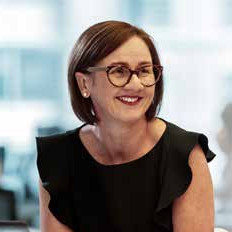
Head of Insurance Claims, Performance and Delivery at CBUS Super
Kerry Vogel is a senior financial services executive with extensive experience leading insurance operations, client service, and business transformation across Australia's superannuation industry. In her current leadership role, she is responsible for the end-to-end insurance function, including insurance administration, claims, trustee services, and the strategic direction of insurance transformation across the enterprise.
Leading teams across Sydney, Melbourne, and Hobart, Kerry is focused on delivering a client-first experience for members, advisers, and insurer partners. She is passionate about building high-performing teams, improving operational excellence, and using technology and process innovation to create better outcomes for customers while navigating an increasingly complex regulatory environment.
Before taking on her current role at CBUS Super, Kerry led a team of senior product and insurance specialists responsible for the ANZ Smart Choice Super product suite. Across a career spanning multiple leadership positions in financial services, she has developed deep expertise in insurance strategy, product management, claims, and service delivery, with a reputation for leading large-scale change while keeping people at the centre of every decision.
Kerry shares her insights on transforming insurance services, leading through change, and creating customer experiences that build trust when it matters most.