Competitive Flows and Adviser Influence: Dissecting Australia’s Super Landscape with David Bell


#21. Co-hosts Sarah Penn and Neil Benson host David Bell, Executive Director at Conexus Institute.
Highlights
- Industry growth: Superannuation assets grew by 12% last year, mostly from strong investment returns. Four funds are now “mega funds” with over $200 billion AUM.
- Mergers and consolidation: Fund mergers continue to shape the sector. Aware’s merger with TelstraSuper tipped it into mega fund status.
- Flow dynamics: Natural flows (member contributions) are steady, but competitive flows are increasingly advisor-led with platforms gaining pace.
- Advisor-driven switching: More than half of asset switches are now influenced by advisers, with platforms offering efficiency and adviser-friendly features.
- Marketing spend: Funds increased marketing by 10%, but there's little evidence it’s driving competitive inflows. Most spend is defensive—trying to stem outflows.
- Retirement focus: Demographics highlight 40% of assets held by members 55+. Funds are investing in retirement products and guidance, but competitive barriers remain for retaining members approaching retirement.
- SMSF trends: SMSFs are seeing net growth and most are established without a formal adviser. But there’s also a flow back as members tire of administration.
- Future landscape: The sector is heading for more mega funds and continued consolidation. Launching new funds is possible, but achieving scale remains a decades-long effort.
- Key takeaway: Sector priorities are shifting towards retirement, adviser functionality, and efficiency—but core flows, consolidation, and operational differentiation remain fundamental for fund leaders.
Bonus: Blame marketing? Absolutely!
Chapters
00:41 - Introduction to Dr. David Bell and the Connexus Institute
07:32 - Exploring Competitive Flows in the Superannuation Industry
11:41 - The Dynamics of Advisor Portals and Fund Competition
20:16 - The Impact of Marketing on Member Retention
28:50 - Shifting Focus: From Marketing to Retirement Strategies
37:21 - The Changing Landscape of Superannuation
42:52 - Reflections on Future Trends in Superannuation
Guest: David Bell
- Connect with David Bell on LinkedIn
- Follow The Conexus Institute on LinkedIn
- Visit The Conexus Institute website
That Super Show
That Super Show is the most downloaded podcast for Australian superannuation professionals. Sarah and Neil cover the issues, debates and decisions shaping the industry - without the spin.
Subscribe to the show wherever you listen to podcasts and don't forget to leave us a rating and review.
- Visit That Super Show website and become a newsletter subscriber
- Email hello@thatsuper.show if you've got a topic you'd like us to cover or a guest suggestion
- Follow That Super Show on LinkedIn
- Follow That Super Show on YouTube
Your Cohosts
Sarah Penn
Sarah Penn is the CEO and founder of Mayflower Consulting, an Australian financial services consultancy specialising in product governance, PDS management, and product operating model design. Her team works with super funds, fund managers, and investment platforms across Australia.
- Connect with Sarah on LinkedIn
- Follow Mayflower Consulting on LinkedIn
- Visit Mayflower Consulting website
Neil Benson
Neil Benson is the global chief product officer at ChandlerCX, where he leads a team focused on intelligent customer messaging for regulated organisations, including superannuation funds, banks, insurers, utilities and public sector organisations. His AI startup, Novagentic, was acquired by ChandlerCX in February 2026.
Mentioned in this episode:
Mayflower Consulting
This episode is brought to you by Mayflower Consulting. If your product team is capable, stretched, and the important structural work keeps getting pushed, that's where we come in. We embed with your team, get the work done, and leave you more capable.
00:00 - Untitled
00:02 - Introduction to the Super Show
00:41 - Introduction to Dr. David Bell and the Connexus Institute
07:32 - Exploring Competitive Flows in the Superannuation Industry
11:41 - The Dynamics of Advisor Portals and Fund Competition
20:33 - The Impact of Marketing on Member Retention
29:07 - Shifting Focus: From Marketing to Retirement Strategies
37:38 - The Changing Landscape of Superannuation
43:09 - Reflections on Future Trends in Superannuation
Welcome to that super show, the podcast where we talk about all things super from the inside. I'm Neil Benson, Chief Product Officer at Chandler cx.
Sarah PennAnd I'm Sarah Penn, CEO of Mayflower Consulting. Each week we unpack what's changing in the industry, what funds are wrestling with, and how tech and regulation are shaping the landscape.
Neil BensonSometimes we bring in expert guests, but mostly it's just us having a real conversation about how super is working and. And what could make it even better.
Sarah PennLet's get into it.
Neil BensonG' day and welcome back to that Super Show. Sarah, it's great to be back again. Sorry I missed the last episode with you. How have you been?
Sarah PennThat is no problem. Lovely to see you.
Neil BensonSo it's good to be back. Today we have another special guest. We're joined by Dr. David Bell from Connexus Institute.I think of the Connexus Institute as a kind of a independent think tank here to take the gloves off and call the shots on the retirement system. David, it's great to have you on the show.
David BellGood morning, Neil. Good morning, Sarah. Thanks for having me.
Neil BensonDavid, do you want to give the folks at home a quick rundown on your background and the Connexus Institute, if I've missed anything there? And then we'll dive into your State of Super 2026 report, which is fascinating reading.We've been diving into some of the detail in that report recently.
David BellSure, Neil, thanks.So I think we should have a rule in this industry that you just say you have 20 plus years of experience, because I think I'm nearly up to 30 now and below. That was in investment management and then back in the days of Colonial First State.And then I moved into consulting, a bit like you, Sarah, and had a. Then I had a career at an industry fund, mindsuper as a chief Investment Officer.All through that period, my passion really grew for retirement phase of super and helping Australia develop that out. I've finished up at mine and had one year to go to finish off the PhD. So I did that. And again, that was sort of all on retirement as well.And during that period, I saw an interview with Colin Tate at Connexus Financial and he was really frustrated about retirement and said he wanted to set up a think tank and fund that. So we sort of got in touch with each other and the rest is history. So the institute's just had its sixth anniversary. We've been doing well.It's a little bit like private equity. There's a J curve to it to get that credibility and respect for your work.And now we have a good track record of work coming through on many different aspects of retirement. We run an education series which is offered pro bono to all the super funds on retirement.And we've just launched a new one on liquidity risk management which has been. I've just done our first course there.And so we're putting out the research, we're engaging with industry, working a lot with regulators and policymakers as well. And it's just all to create that retirement system is the aim.
Sarah PennThat is very cool. I'm here for it.
David BellWe enjoy it.
Sarah PennLet's get into your report. Oh, and we need to know the exact name of your PhD because I always find these to be excellently hilarious.
David BellI have to brush off some cobwebs there. It was called Three Essays on Intertemporal Acid Allocation.
Sarah PennOh, there we go.
Neil BensonWow.
Sarah PennRiveting.
David BellOr otherwise known as a cure for insomnia.
Sarah PennOkay, perfect. Let's get into the report. So let's start off with. We'll start with the macro and get down to the micro. So size. Let's talk about the actual landscape.What happened?
David BellYeah, so the size of the industry, overall the industry grows at about 2 to 2.5% a year. And that's just all the member flow. We have a population still contributing in overall.And even though we've got more retirees coming through, the net of payments in versus payments out is still positive. So that gives you that 2.4% type number. So really what drives industry growth is investment market performance.And last financial year was a good year, so that contributed nearly 10%. So overall the apparat regulated superannuation sector grew by about 12% in terms of assets under management, which is significant.
Neil BensonWhopper.
David BellNow, if you look at it from a fund to fund perspective, like the composition of the industry, what really changes the dynamics there is mergers. That's the transformational. So if you remember Back Art was created as the merger of Sunsuper and QSuper.Those types of huge mergers are really what changes the shape of the industry. And we didn't have too many of those last year. We had Aware announce the upcoming merger with Telstra Super.And if you account for that, that actually transforms Aware into a mega fund that will take them over that 200 billion asset under management mark. So that's pretty interesting. And they were joined by Insignia.So we now have four funds who we would term as mega funds, which we define as assets under management exceeding $200 billion. So they're probably the main Highlights of the year in terms of size.
Neil BensonYeah, I like. I liked your size brackets. I just think a bit like income tax, it's going to be bracket creep.There's going to be mega funds just to scrape over that line just because of investment returns. So we may have to index for inflation.
David BellNow, we agree. We actually agree on that. You actually called out a nice little point of internal debate, Neil, So thank you.
Neil BensonIt's amazing. So big four banks, big four supers. I wish we had four big supermarkets. But that's another cultivation question.
Sarah PennIf it's grown by about two and a half percent, is that. So that's 2.5% of new money coming into the system.
David BellYep. That's member flows.
Sarah PennYeah. Right. Tell us all about that. What are the key highlights on the.
David BellYeah, so we've been running this report for a few years now and we've come up with our way of breaking down flows, which we think a lot of industry has picked up on and that is natural flows. And then you have competitive flows. So natural flows are what I was just describing.Members contributing into their super accounts and then you have payments out, which is largely pension payments, but could also be conditions of release and so forth. And really the competitive flows is a zero sum game. Ultimately the money goes out of one part of the system and into another.So that natural flows number is 2.4% at a system level, but it's really dispersed across the industry as a whole. It ranges from about 7% down to minus 1%. So some funds actually start the year knowing or expecting that they're in outflow.And the reason all comes back to fund demographics.So young funds have more members contributing and fewer pension payments, and funds which have a cohort of older members paying out more in pensions, effectively. So it's a really fascinating dynamic. We have a little chart in there that shows that relationship and there's a really strong correlation there.For those who are into statistics, then you have. So who are the young funds? It's groups like Rest and Host Plus. So you get your first job and go into funds like that.But then also interestingly, some of the thematics.So you have Australian Ethical and Future Group, both actually have a young membership cohort because a lot of people have chosen to be in those funds. That sustainability thematic, they are younger people overall.So even though competitive flows have slowed down for that part of the industry, they still have a young membership and they get nice flows there. So that's the natural flow story. If we move on to competitive flows, there's One key theme here.I'd like it if there was more than one theme so I could just expand for you. But the key theme here is the flow into platform platforms pretty much from everywhere else.So it's not just this whole industry fund retail story that's a little bit old and a little bit outdated now. It's really flows from profit for member funds and corporate master trusts all going into platforms which effectively service the advice industry.And that's the attached thematic that most of those flows now are being driven by advisors. So some of those platforms you can't get on unless you are an advisor, Some you can get on directly.But we sort of went through an exercise of tagging each platform and super fund and we estimate that at least 55% of assets are switching decisions are driven by advisors. Our core data estimate that number is closer to 70%. So you can see the role of advisors in terms of driving that competitive activity at the moment.
Neil BensonI wanted to maybe pull on that thread a little bit. There's only maybe 10,000 active financial advisors in Australia, some of whom work for superfans and others.So it's a relatively small number of advisors who would advise a retiree to switch to a platform. I'm wondering what the incentive is there. Is it because the platforms offer all the flexibility and features that a lot of retirees need?Is it because they offer products with better performance? Or is it because they make it a lot easier for the advisor to charge a service fee than an industry fund might?Wondering why we're seeing the flow is going in that direction.
David BellI'm just going to navigate my way around this question carefully. Neil.
Sarah PennNo, go nuts. Tell us what you really think. I always do.
David BellYou do ask the right question. And that is what is motivating advisors?There's a small number and we know supply is relatively constrained and we think there's an unmet advice need. And that's what's really interesting.As advisors come back in, new advisors enter the industry and even advice supply generates through technology efficiencies and so forth, we think that that flow will actually increase, not decrease. That's my guesstimate of that. Where that flow will go, it's not going to disappear. So it is important to understand why.And we think, we think the performance story is difficult to unpack actually because an advisor constructing their own portfolio or something like that, it becomes very difficult to compare those outcomes against say, my super outcomes and so forth. So it's difficult to say it's a performance story.But I do Think it's an advisor functionality story and ease of business and that's really interesting in itself.So if you go to a presentation by a platform, many of them would stand up and say we're investing huge amounts of money into making our platform more efficient for you to allow you to move from 120 clients per advisor up to 140 on that aspirational journey to 200. So that's interesting in itself.There has to be a member benefit packed into that and I guess the member benefit would be the time taken to produce the plan and maintain the plan and the services and the richness of those services being offered to members.But again, I think it's going to be nearly impossible to tease out the full value of that because you're mixing now products with services and services are charged down on an hourly basis by advisors and the product outcomes based on assets.So you can sort of see how difficult it will be for regulators looking at this space and try and understand this dynamic themselves to really be able to sort of weigh in and sort of offer a view on it. So it's a fascinating space.
Neil BensonAnd do you see any either retail funds or industry funds or profit from member funds investing heavily in their technology to try and compete with the platforms on the kind of functionality that advisors need to serve their advise members and to make the advisor's life more efficient? A bit like some of the platforms do with the productivity story for advisors as well.
David BellYeah. Last year so we offered to present state of super to pro bono to every fund in the industry and last year was the year of the advisor portal.So a number of funds they went through the similar thematic to last year we presented that and they said yes, we're building an advisor portal which will make us far more attractive to advisors.And that's really interesting because you read the data and you see that advisors themselves are reducing the number of platforms that they're working with. I think that number trends down every single year.They're trying to get more and more efficient themselves and so will and those platforms are competing intensely with each other, throwing huge capex to that space. So it's hard to then see whether an advisor portal is going to be enough to make the advisor want to work with that fund.I guess if the member's really comfortable with that fund, has good trust level, has had good experience and they sort of say to the adviser, well we are quite pro remaining with this fund that may then a good advisor portal may then get the adviser say, well actually I'm happy Enough to stay here. This is a good space for my members so there'll be some effect.But I'm not sure you could view an advisor portal as being a strong competitor against the platform.
Sarah PennYeah, no, I don't think it is. Well, I think it's a start. Right.It's really interesting though when you talk to, when you talk to actual advisors, you know those people, they will tell you that your average punter couldn't care less which fund their supers with.So this sort of idea that funds have, have loyalty and you know, high brand sort of connectedness and all that stuff, for the most part it's absolute rubbish. They don't.Having said that, I don't think most funds think, think that there is, but this sort of idea that, you know, so long as we've got the things to make it easy enough for an advisor that, that members will just hang around with our fund is, is not going to work. It's interesting though, having spoken to some of the industry funds as well, I know at least one of the bigger ones, very well regarded big ones.I was talking to the head of product and he said, look, we're just not putting money into the whole advisor thing. We have our own internal advisors, we have an awful lot of them.The amount of money we'd have to put in to get to the point where external advisors, they call them EFAs, get to the point where EFAs love us and want to do it would take so much money away from all the other things that we want to spend money on that we're just not doing it. Sorry. We look at the. From a competitive flow perspective. Yes, the competitive flows are absolutely going to the. Well, it's to the new platforms too.It's not even to all the platforms, it's really to some of the newer ones.But when you compare that to the actual amount of money that's coming in the front door, it's still a very small proportion from this big fund's view they were like, yeah, well we know that's happening and we see it, but it's, it's. We just sort of accept it as something that happens that we don't care about. I'm sure.Having said, I think it's very different though, depending which fund you speak to.
David BellYeah, I think that's quite a rational view.It's something we actually consider at the end of the booklet that you look at the shape of the industry and some of the dynamics and there's a lot of funds that have younger memberships they have higher flow rates because they're getting all that natural flow but they have smaller balances. And then you have, at the other end of the spectrum you have funds like effectively platforms which are getting all the advisor directed activity.They tend to have members with higher balances but they're in outflow or natural, weaker natural flow positions. So there's a funny ecosystem there.And you do wonder whether funds will start to say, well actually we specialise at that workforce level and we're gonna service those members really well and if we lose some of them across to advice then a. That's potentially rational, we're gonna accept that and we're gonna keep continuing where we think we best serve the majority of our members.That's interesting insight you've brought there Sarah. And so it'd be interesting to see if all the funds go down that pathway or not.
Sarah PennYeah, they definitely aren't. Some of them are absolutely going nuts building stuff for advisors and really trying to be a fund of choice for advisors.It'd be really interesting to know if any of that's working or not though. I'll have to go and drag through my memory and try and remember which ones are which and see if I can tell you.We could pull the stats apart a bit more. But it is fascinating where it's going. Cause this is the first year that isn't that right?This is the first year that the platforms have massively taken over on the competitive flow front. Like it's really been a switching year.
David BellIt was pretty strong last year. This year it's super clear. So that trend has accelerated and it's just there and it's obvious and it's just the platforms versus everyone else.And it's funny, some of the groups that own both types of businesses like an Insignia or an Amp, they're getting offsetting flows.Their newer age platforms are doing well and participating in competitive flow, but their Master Trust businesses are experiencing competitive outflows. So it is an interesting dynamic there.
Sarah PennThat is what they say from a big business perspective that you should cannibalize your own products.If you just try and protect them and refuse to move to any of the new whatever in whatever industry, then you will end up getting eaten and you won't get, you won't be doing any of the eating.Whereas if you look at like Amp north, which is one of the ones that I think is doing all right on the getting money in front compared to as you say, their Master Trust, it's a different kettle of fish and interestingly at amp now they run those things as really different businesses, completely separate.
David BellYeah, that's right. We've separate heads of separate CEOs effectively.
Sarah PennYeah, yeah.
David BellI think that's important from a cultural perspective as well. Given your research.
Neil BensonLook at outflows to SMSFs from either retail or not for profit funds where there isn't really an advisor involved. I don't know if that shows up in the APRA data. I'm curious. There's a growing, my suspicion is there's a growing set of diy.I can go to some low cost online SMSF provider and for a couple hundred bucks I can set up an smsf. I can get an annual audit on whichever account's done.I think that cohort is growing, but I don't know if there's anything in the data to confirm or deny that.
David BellIt's not in this data set. But there is actually an area we're quite interested in as well.So some of the recent results which have come out, looking at the SMSF sector, sort of showing to your point, Neil, that 80% of SMSFs are being established without an advisor being involved. 80%, Yeah.
Sarah PennThere is an advisor though. It's just an advisor in quotation marks because there's nearly always an accountant who's saying things.Not all accountants obviously, but often they say things like, oh, obviously I can't give you investment advice, but in my SMSF I've invested in blah, blah, blah.
David BellYeah. So the flows out, I think the number wasn't too sizable. It was something like $11 billion flowing out of the APRA regulated funds across the SMSF.So we can get the macro data and we can see it fund by fund, which is roughly just proportional to other activities. But don't forget there's also a flow back in from the SMS sector.So at some point there's a cohort of people, there are people saying, look, this is too much hassle or I'm underperforming or it's stressful or actually I'm starting to find this cognitively difficult. And so there are reasons.So it's interesting we don't talk much about the life cycle of retirement, but I think the industry at the moment is focused on a getting retirement, working around the point of retirement. But as the lifecycle kicks in, I think you'll see a flow from SMSFs back into Apr regulated funds.
Neil BensonCan we chat a little bit about the role of marketing? Sarah and I have a good giggle at the efforts of marketing teams and whether or not trying to fill A leaky bucket is money well spent.What does the data show us in terms of investments in marketing?Whether trying to bring in more members in through the front door or I guess there's this element of defensive marketing came through in the report as well.Let's just remind members that they're with a strong fund that we advertise and they can feel confident and that we're a trusted brand because, you know, we're in the shorts of their favorite football team. To what extent is that stemming the tide of outflows as well?
David BellIt's a really tricky question, Neil, because we're actually trying to unpack this at the moment in a separate research project just to sort of understand what drives that member switching decision. Is it marketing spend? Is it sort of performance? Is it service level issues? Is it brand recognition or advisors? And it's really, it's really unclear.Some funds which I personally rate highly, a couple of them do spend a lot of marketing and they're still not experiencing competitive inflows. And so it's an interesting dynamic. I tend to always look at this through the financial lens.And so you spend members money or shareholder capital to market and what you expect or hope to get from that is members into your fund who bring assets, who add scale and that scale delivers a scale benefit which delivers a return on marketing. As I look more at that model, I find that quite challenging premise.Many funds already have most of the scale that they need and so it is difficult and we are seeing this concept that you sort of alluded to it spend to defend is what I call it. And even that's really difficult to bear out the benefits because the benefits are only a counterfactual.You're sort of saying if I hadn't have spent this money, a certain portion of my members would have been less aware of us and may have been more vulnerable to switching somewhere else.And the problem is if everyone thinks like that at a system level, it's only a downward spiral because once one fund spends more to maintain your defence, you need to spend more as a competing fund. So spending went up 10% this year. And we're talking about a member switching marketplace which hasn't changed at all.The amount of assets switching each year is pretty flat. It remains roughly 3% of industry. What we're also seeing is a lot of what I call churn switching. And I'm just thinking at a system level here.So every year thousands of members move, for instance, from art to Australian super, but thousands of members move from Australian super. To art.Now, without offering a view on which ones are better fund or anything like that, you'd have to say they're both large funds with good scale and APRA regulated both passing the performance test is a really a system benefit to have that level of switching going on between there just offsetting each other. So that could actually be one of the costs of this increased marketing spend as well.If I just tie it back to the previous discussion, I would just ask a question.I'm far from a marketing expert apart from enjoying the Gruen transfer, but I just asked the question, are funds if most of the member switching has been driven by advisors, is the marketing being targeted at members or advisors? So I'm just sort of asking that question out loud as well.
Neil BensonI'd say the vast majority is directed at members but interesting to speak to some advisors and see what their impression of of the two advisor marketing channel looks like as well.
Sarah PennThe interesting thing too is actually from a marketing perspective there might be a similar amount of effort going to advisor versus member marketing potentially but the cost of both is massively skewed because the cost of running an ad is, I don't know, 10 grand a month, something like that to you know, have online ads and do things. It's not, it's not too bad. Whereas the cost to run a month's worth of ads on Sydney Morning Herald or something is hundreds of thousands of dollars.So. But the work required to get to the point of doing both those ads is actually the same from an internal perspective in the marketing team.You know, you've got to do all the same thinking about target market and creative and how it's all going to come together. But yeah, it is, it is really interesting, isn't it?
Neil BensonDavid, have you done any kind of analysis of per dollar spent on marketing? What's the net number of new members? So if I spend or cost to.
Sarah PennCost to get a new member out of that marketing budget?
Neil BensonYeah, kind of customer acquisition cost and then also per dollar spent on marketing, what's the net inflow or outflow? Which funds are in the negative?They're spending money on marketing but their number of members is going down and the outflows are bigger than the inflows and then figuring who's just got the most efficient marketing. Therefore if you rank the funds on that basis.
David BellYeah, I haven't done that analysis Neil.It would be really important analysis because I think this spend, eventually the regulators may get more concerned about it and it becomes a hygiene factor at a system level and you Want a good efficient system. And so I agree that type of analysis is important. It's probably difficult when there's Bemba led and there's advisor led, that's what's.And we can't formally identify the two.So that's probably what's difficult at the moment because effectively nearly any industry fund and any master trust is experiencing outflows, yet they're advertising to have a spend. So it's nearly like, is it relative to that to a trend line to sort of work out the benefits? Sort of. It's a difficult one to bring together there.
Sarah PennYeah. It's like saying who spends how much on cyber versus how many cyber incidents that they had? You know, it's hard to.If someone's spending squillions of dollars on cyber and they haven't had any cyber incidents, does that mean that it's effective use of members money or is it. Is it just that they got lucky or.
Neil BensonYep. You know, had no cyber incidents.
Sarah PennYeah, exactly. I think so. I think you have to be very careful that we don't. I don't know. Marketing's always an easy thing to pick on. Right.Because it's obvious, you know, you go to the footy and you see the Host plus logo rolling around the thing and you get upset that hostplus is spending all this money.Then if you're not a member of hostplus, do you care anyway, except if you, Neil and me, because we like to talk about it, I think we've got to be careful.Having said that, prima facie, one would definitely say that the amount of money that's been spent on marketing in the last year in super funds has not done much for anyone.
David BellIt's this challenge of system level thinking versus fund level thinking.
Sarah PennYeah.
David BellAnd so what fundamentals would say, well, we should spend less on marketing when they're in this competitive marketplace where their peers are spending a lot. That's a challenge and that's why we keep flagging this issue in the state of super each year.We actually, in a submission we made to APRA a couple of years ago, suggested APRA should have a little template where they ask the funds to write down what they expect to get from their marketing and then APRA would then add it all up and say, well, hang on, you're all competing for a total of X million members switching and we only get x 100,000 switching each year or whatever and just really start to call it out. So unfortunately that one didn't get picked up.
Sarah PennAs someone who's worked in marketing for most of my career like you are well and truly between a rock and a hard place. Right. Because if you're not doing enough marketing, everyone yells at you and if you're spending too much on marketing, everyone yells at you.So in fact I will, I found this great picture. I will put it, I send it to someone, but I'll put it in the, we'll put it in the show notes of why it's always marketing's fault.It's a, it's an excellent flowchart which demonstrates in all circumstances it's always marketing's fault. So I'll put that, I'll put that in the notes. It's very funny.Even as someone, I think you have to work in marketing to really see the funny side of it.
Neil BensonI hope there's still lots of marketing people left listening to us.
Sarah PennLet's unsubscribed, let's switch and look at.
Neil BensonThe analysis that you did on retirement in the 2026 report. David, I think at the top of the report you said it was a really quiet year legislatively from a policy perspective.And then more recently we've seen treasury publish some best practices around retirement income solutions. What are the trends look like for funds from a retirement perspective?
David BellIt's an interesting space.So the retirement income covenant's been around for three and a half years now and we're sort of, we're worried that three years after we wrote an article saying three years, we're still a long way from having a great retirement sector.Let's hope it doesn't take 10 and increasingly it feels like it will take 10, which would be really disappointing and maybe that's a function of having such a big accumulation account balance focus system and not turning that dial and focus on to drawing it down. Well earlier we've built up these huge muscle memory big ships.All the analogies you want to throw at that are there both at the fund level and the consumer level as well. We're all quite account balance focused.But in terms of predicting the retirement wave, there's probably one areas I do have a little bit of confidence in. Because demographics are highly predictable, you can't create create new births going back in time.So what's there in the data in terms of age cohorts is there and unlike market returns which are hugely difficult to predict, so there are already some really large retirement funds.So there's already 10 funds that have more than 50,000 pension accounts amongst them in Bishop, there's already eight funds that have more than $30 billion in pension accounts. So we think of that 30 billion number because that defines a significant financial institution.So if they were to standalone fund, you'd already have eight significant financial institutions purely servicing retirees stand out there.
Neil BensonI mean they just seem head and shoulders above everybody else in terms of number of retirees, the amount of money in the retirement phase.
David BellYeah. CSC's the standout in terms of number of pension accounts. Yeah.But then when it comes to every other stat, it's very hard to understand CSC because they're a defined benefit, have a huge cohort of defined benefit members and those defined benefits sort of get top up funding from the government and so their total assets don't quite match up to the size of their account.
Sarah PennSo no, you have to use their outstanding liabilities or whatever there's a particular way they call it and when you do that, it's many multiple times higher than anyone else.
David BellYeah. So they are the pension provider of Australia. So they spend a lot of time and focus on it. And a lot of that's really important.You alluded to it earlier, Neil, administration and security of payment before we get into all the planning and the guidance and the product mix and the integration of all that. So that's interesting. We sort of use two stats out of state of super to really make the case for focusing on retirement.So we calculated the proportion of members 55 years or older across funds and 80% of funds have more than 20% of their members aged 55 or older.So in retirement or approaching retirement, there's definitely a strong fiduciary case for nearly every fund in Australia to be looking after a significant cohort of its membership.But then if you look at assets under management 55 years or older, that number becomes 80% of funds have more than 40% of their assets concentrate in that 55.
Sarah PennYeah, right.
David BellOr older cohort because they all have bigger balances because they've accumulated for longer. So the first stat is the fiduciary case, the second stat's the business case.And I use both those rods just to get the industry moving and I think they both have their impact. So there is a lot. That number's just going to keep drifting up just like a big glacier moving through the valley.
Neil BensonDo you see funds making big investments in retirement products, in advice and is it having an impact compared to the spend on marketing, for example, spending on retirement solutions, is that helping to retain members, helping to retain assets, or is it come harder to dig into than that?
David BellI think every initiative that's being undertaken is improving retirement outcomes for Australians.That's a great starting point, that you're getting better products, better guidance and understanding how to use those products and maximise the functionality and understand what your retirement might look like and spend with more confidence.So we see from multiple groups that made innovations in their retirement offerings, they're doing research that shows that those members are spending more and they're more confident in their retirement and that's a great, that's an important combination. They're not just spending more willy nilly because they're not sure what it's going to look like.They're spending and they have confidence that they've got and that's what you want. So that's really good. It is hard to identify the flow benefits and the competitive benefits of all of that.And I do think there is an impulse at the moment that funds realise they're losing members approaching retirement through the conduit of advisers across the platform. So they're leaving their funds and maybe where those members have complex needs, that's actually quite appropriate pathway.There probably is some sort of crossover cohort of members who, who have decent balances but relatively simple, straightforward financial needs. And we are looking forward to funds getting the mix of products and that guidance.You've got to be careful using the word vice around super funds, but the guidance and the support to get into an appropriate solution so that they have the confidence with a fund that they have good trust levels.
Neil BensonI think that unadvised cohort is, is massive and there's nothing we can do to really force everybody or even provide enough advisors to advise everybody. So there's just going to be a massive cohort of people who can't access advice. And so we're going to have to provide sophisticated guidance.I love that word, education.Whether it's technical or technology solutions to do that, some kind of robo advice and help those people retire, have epic retirements and feel good about having enough money left for aged care, having enough money left to fund their old age. So, yeah, it's great to see those investments coming through.
Sarah PennYeah, it's interesting, isn't it?I was just thinking, if you look at the money that's left to go to the advise platforms is left as in has exited industry funds or master trust to go to advise platforms.The money looks high, but the number of people that it accounts to is probably actually a pretty low number, which does mean then there's a hell of a lot of people who are left who are in that 55 plus as you say, with substantial balances who aren't getting, potentially aren't getting any advice or nudging or guidance or whatever you want to, whatever you want to call it. And I did just grab out back to what we were talking about earlier about self managed super funds.So Neil, you are in fact on the money about the uptick in people starting self managed super funds. In 2023, 24 there were 33,000 new SMSFs. 15,000 Exits though, so about 17,000 net.In 2425 there were 42,000 entrances and only three and a half thousand exits.So net there were 38,000 new SMSFs in 2025, which is a 6% growth on the number of SMSFs net there definitely are people, there's still only 40,000 people who are exiting the, probably the industry, well, exiting out of some other fund to start at smsf.But yeah, it's a big uptick in percentage wise of the, and the growth numbers are increasing each year, so it's accelerating the number of SMSFs that are happening.
Neil BensonI think the final section of the report really looks at the changing landscape of superannuation as a sector. The number of funds, the size of funds, the potential for even more mergers still to happen. David, what are your predictions there?You've said there are now four mega funds. Are we going to see more funds reach that kind of scale through merger?And what does it mean for anybody or any organization considering launching a super fund? Do you think we've seen all that to launch in Australia?
David BellYeah, it's probably two things that have been the discussion here and I think we've reflected on before the dynamics of the ecosystem. So if you think about us saying Bolt, what was amazing about his running was he had a huge stride, but he had a very high frequency of stride.And if you think about the super fund equivalent, you want members with high account balances, but you want to be in inflow as well. And those two things don't quite go together. So we have this cohort of funds who are members with smaller balances but they're in natural flows.And then you have this cohort of funds who are higher balances but they're paying out. And then you have competition which tries to level funds grabbing from each other and that sort of creates the other dynamic there.So that type of dynamic creates all these challenges with regards to your operational focus, your product mix, how you price, how much you focus on retirement, how you approach competition. So it's all interesting. I think we've had A smattering of the discussion today has covered that.What we also looked at was we just took the existing universe of 46 funds and just pretended that everyone's going to grow at 8% per annum for the next 10 years and you end up with a $6 trillion system where 11 mega funds have 3 quarters of those assets under management. What you also have is nearly a trillion dollars between the largest and the smallest fund in the industry. And isn't that amazing?And so that's without assuming any consolidation. And when you frame it like that, surely there will be more consolidation. So what will this system look like when we start to get to that stage?More mega funds, more concentration, fewer small funds. What would the regulatory model look like? Would they want to have be overseeing a system that has that much dispersion in terms of size of funds?So we think it's very interesting in terms of your new entrants. Neil has been interesting.So if I just give you one analogy, that is probably the case studies of Netwealth and Hub24 which have both found their way across into that 30 billion plus size, a significant financial institution, all the while achieving high rates of growth. Yet it still took them I think 13 years, 13, 14 years to get to that $30 billion number from the time they created their Superfund products.
Sarah PennYou know what, it's actually even longer than that because I left Macquarie 12 years ago nearly and Hub24 and Netwealth were already around and already actually doing okay at that point. So I reckon it's more like 20 years. I'll check.
Neil BensonYou're a 20 year overnight success story.
Sarah PennYeah, the 20 year overnight success story.
David BellThe show is that the length of time required to achieve scale. And we often see like we track the growth rates and you so often we'll see growth stories which burn out.They're in a thematic or they face intense competition at the particular niche that they've identified or they're in a technology race and they can't spend as much.So it is really hard to see how new incumbents and that's what makes the vanguard story quite amazing to have two years in a row of triple digit growth. It's terrible for the axes of my charts but. But it is impressive. You know, I just wish they'd be more responsible there. But.
Sarah PennHere we go, number 24, 2007.
David BellYeah, isn't that amazing? So, and they're around, you know, they're.
Sarah PennNudging towards 50 and net wealth was 1999.
Neil BensonGood Lord, seven years.
David BellWow.
Neil BensonPhenomenal.
David BellSo it takes a lot of continued growth to compound up and give you that significant size. So it's hard to see any new very large fund entering the system. Now, Vanguard is potentially one of the last case studies to keep track of.
Neil BensonThe one I'm eagerly anticipating is BetaShares launching BetaShares Super. I think they've got an interesting position because they've only got a retail investment platform and a bit like Vanguard and theirs as well.They're recognized as a fund manufacturer, too. They've made a slightly different strategy in that they've acquired Bendigo super as a, you know, it's a way into the. To the market.
Sarah PennIt's such hard work to, you know, make something from the absolute ground up when everyone around you is telling you it's a stupid idea and it's never going to work. The energy that's required from all those individual people to get. Get it off the ground and get it going, it's just astronomical.
David BellYeah. So it's going to be. It will be very interesting to watch. There's a real. You effectively call out a temperament challenge there, don't you? Sort of.To keep at it, definitely, and so forth. But I mean, the numbers for Vanguard the last couple of years have been quite amazing, so it will be fascinating to watch how it develops.
Neil BensonDavid, maybe we can wrap up just by asking you to reflect on 2026, 2025 data in your 2026 report. What does it mean for 2027? What are your predictions for the superannuation system?Is payday super going to have a big impact, do you think, this year? Are we going to see DBFO Tranche 2 have any kind of impact? Where do you see it landing this time next year?
David BellYeah, the funny thing is about this data, you've made my job easy for me here, Neil, because the trick is this financial year is already halfway over, so it's nearly two thirds over. So most of those things won't come in and impact the financial year numbers. And so I feel a bit more confident on this one.But over time, all those trends are going to contribute to the system. And I think the biggest trend will be how funds service their members around that retirement age.And that just has so many ramifications for how you run your business, what products.And you've seen, if you read those best practice principles that came out a couple of days ago, which we are quite supportive of, and then you compare them to the current activities of funds, maybe just take the list of what you thought their priorities were a couple of years ago, there'd be a huge mismatch there in terms of priority and where the spend goes and where the activity goes. So it's just going to be really fascinating to watch how the sector develops along those lines.
Sarah PennYeah, it certainly is.
Neil BensonWell, David, I look forward to having you back to have a look back at 2026. When time is right. We'll include links to Connexus Institute and so people can follow your research and some of the media that you put out.How do folks connect with you and follow you? What's the best way for them to reach out?
David BellYeah, I'm not the most social media friendly guy, but we're prominent on LinkedIn and we make all our research freely available on our website. So that's just the connexusinstitute.org fastic thanks.
Neil BensonSo much for joining us.
David BellThank you, Neil.
Sarah PennThanks. This has been great. We'll see you soon.
Neil BensonThanks for listening to that super show. We hope today's episode gave you something useful to take back to your team.
Sarah PennIf you're thinking we should talk, we'd love to chat. You can book a meeting with either of us via the link in the.
David BellShow notes and don't forget to follow.
Neil BensonThe show, share it with a colleague and drop us a line if there's a topic you want us to tackle.
Sarah PennCatch you next time on that super show.
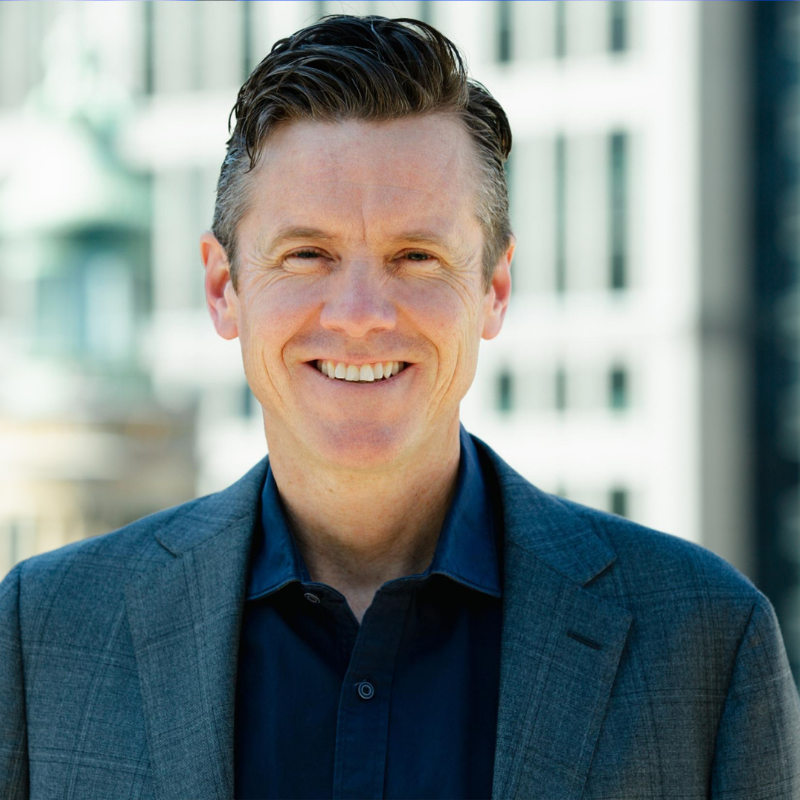
Executive Director at Conexus Institute
David Bell is the executive director of the Conexus Institute, an independent research institute focused on improving Australia’s retirement system.
David is an active researcher (industry and academic) in the areas of retirement, superannuation, and investment management. He recently completed his PhD at UNSW, exploring lifecycle asset allocation problems.
David was previously CIO at Mine Super. Prior to that David ran his own consulting firm (St Davids Rd Advisory) and spent 12 years at CFS GAM. David led the development of MDUF (the Member’s Default Utility Function), was a co-founder of Cuffelinks, and developed and taught the hedge funds elective at Macquarie University’s Applied Finance Centre.