Adrian Gervasoni: Transforming Member Portals for Superannuation Success


#17. Co-hosts Sarah Penn and Neil Benson chat with Adrian Gervasoni, Executive Manager Advice Services at Industry Fund Services.
Highlights
- Member engagement challenges
- Rethinking the member journey
- Super as 'your future wage'
- Super portals try to present too much info
- The power of nudges
- The new class of advisers - what this means in practise
- What we can learn from banks closing branches and moving customers online
- Webinars and events are fun but only reach a small number of people
- The future of portals
Guest: Adrian Gervasoni
- Connect with Adrian Gervasoni on LinkedIn
- Follow Industry Fund Services on LinkedIn
- Visit Industry Fund Services website
That Super Show
That Super Show is the most downloaded podcast for Australian superannuation professionals. Sarah and Neil cover the issues, debates and decisions shaping the industry - without the spin.
Subscribe to the show wherever you listen to podcasts and don't forget to leave us a rating and review.
- Visit That Super Show website and become a newsletter subscriber
- Email hello@thatsuper.show if you've got a topic you'd like us to cover or a guest suggestion
- Follow That Super Show on LinkedIn
- Follow That Super Show on YouTube
Your Cohosts
Sarah Penn
Sarah Penn is the CEO and founder of Mayflower Consulting, an Australian financial services consultancy specialising in product governance, PDS management, and product operating model design. Her team works with super funds, fund managers, and investment platforms across Australia.
- Connect with Sarah on LinkedIn
- Follow Mayflower Consulting on LinkedIn
- Visit Mayflower Consulting website
Neil Benson
Neil Benson is the global chief product officer at ChandlerCX, where he leads a team focused on intelligent customer messaging for regulated organisations, including superannuation funds, banks, insurers, utilities and public sector organisations. His AI startup, Novagentic, was acquired by ChandlerCX in February 2026.
00:00 - Untitled
00:02 - Introduction to the Podcast
04:30 - The Future of Superannuation Member Services
13:51 - Engagement and Awareness in Superannuation
21:57 - The Importance of Simplicity in Member Engagement
23:35 - Exploring Retirement Income Solutions
33:56 - The Role of Nudges in Financial Advisory
39:51 - Transitioning to Digital Banking Services
Welcome to that super show, the podcast. We talk about all things super from the inside. I'm Neil Benson, founder of Novagentic.
Sarah PennAnd I'm Sarah Penn, CEO of Mayflower Consulting. Each week we unpack what's changing in the industry, what funds are wrestling with and how tech and regulation are shaping the landscape.
Neil BensonSometimes we bring in expert guests, but mostly it's just us having a real conversation about how super is working and what could make it even better.
Sarah PennLet's get into it.
Neil BensonWelcome to that super show, everybody. Sarah, you and I have the pleasure of being joined this morning by Adrian Gervasoni. Adrian, good morning. How are you doing?
Adrian GervasoniGood morning to you both. Thanks for inviting me on.
Sarah PennI'm excited, very happy to have you here.Talk about lots of exciting stuff, kick off the year in a positive way and talk about how we can actually improve things, some concrete ways to improve things, not just admiring the problem. As someone said recently, Adrian, we had.
Neil BensonAn opportunity to meet at a recent conference. Think it was done at engaged 2025.But for those who haven't met you yet, I'd love you to introduce yourself and tell us a little bit about industry fund services. I'm sure a lot of the listeners are already familiar with the organisation, but just remind us who you are and all the good work you do.
Adrian GervasoniThanks. Yeah. So originally I was a financial planner. I worked in private advising and fortunately found myself working for a super fund.At the time it was called Health Super Victorian Public Sector and that morphed into what's now aware super. I was there for 12 or 13 years and a variety of roles, corporate strategy.I was working in mergers for a little while as a sort of weird right turn I took, but I've always had this passion for advice in the broadest sense, not just financial planning as such, but, you know, having been raised by a single mum who I thought did a great job raising two kids, put us through some private school and what have you. She always had a really strong hold on the household budget.And for me, that sort of early intro in managing the P and L, whether that's in a business context or in a home budget, has always stayed with me. And for the last six or seven years I've been at ifs.So for those that might not know of industry fund services, where a business that's owned by a collection of super funds, the industry funds that you'll have seen the brands of, and over the sort of 30 odd years, IFS has done a bunch of different things. When the funds were first Kind of being born if you like.They were not much more than brand connected to particular awards and most of the behind the scenes stuff if you like, admins, member services were shared amongst the industry funds and IFS was the sort of vehicle that delivered those sort of backend services. And over the journey we've seen IFM spun out of IFS and Frontier Advisors and Super Partners which became Link and now mufg.So yeah, IFS has done a good job of giving birth to other businesses and as of course funds have matured they've brought a lot of those things in themselves as well. So now our primary job is to support funds with the delivery of financial advice and education and we also have a debt collection service.A bit of an unfortunate thing of the superannuation industry is that there's quite a few members that don't receive their superannuation entitlement. So we have a service where we recover unpaid monies on members behalf.So but the bit that I'm responsible for the financial advice services, what we do is we work with about a dozen, we license their advisors and tools. So whether they've got digital advice or education tools and so the licensing comes obviously there's your ticket to play the license itself.But probably the bit that we're most focused on is you know, how to, how to do advice as cost effectively as possible so the funds can scale their services.So that's where we spend the bulk of our time is on technology, on training and obviously quality assurance to make sure that the advice that the funds provide isn't filled self interest.There's always that risk as a product manufacturer that whilst you might have, you know, a noble intent to help members, you also have these commercial drivers to grow membership, retain members.So you know, we feel that you know us as the licensee, we have a really important job in making sure that the advice members receive is primarily for the interest of the member. And the funds need to be good performing, keep their fees low to have the right to retain that member.
Neil BensonYou recently published an article, Adrian, about kind of the future of member servicing, arguing that we just haven't hit the right kind of sequence of incentives and nudges and recommendations for members. There's still a huge suite of members that are disengaged that don't feel like they're part of their super fund.They don't really feel like they're a member of anything. I'd love you to summarize that article for us and then we can dive into some of the specifics yeah, well,.
Adrian GervasoniI mean, almost every other day we're thinking about how to have advisors, how to give them more time to see more members. You know, even if we could double our advisor productivity.So for a retirement advisor, a really good year might be that they meet with around 250 individual members and provide about 100, 150 of those with comprehensive retirement advice, you know, household couples for advice. And, and so in a financial planning context, they are, you know, they sound like big numbers.You know, for a retail advisor, you're dealing with, you know, a much smaller number of clients. But then if you look at a superannuation fund membership, they're still tiny numbers.You know, we, you know, we're still talking single digits in terms of members who will get access to advice.So I think that's something that's been kind of, you know, needling at us here is to say, well, we've got to still do that work because in the short term that's the service we've got to play with. But, you know, kind of looking ahead to say, well, what does a successful super system look like? How would you measure it?And it can't just be based on, I guess, surface level metrics like website clicks, webinar engagement or these sorts of things. We've got to be able to look at, well, what's the end product that these members get from us? And that has to be the wage we pay them.Now whether you peg that wage to some standard, like the ASFA retirement standard, what have you, but like, in my mind, like right now, it doesn't really matter what measure or benchmark you set, just measuring it in itself would make, would force some change in our industry.But yeah, I think, you know, like yourselves, having been to so many industry conferences and events, I often hear the same sort of language used which, which is almost giving us an excuse not to do different things.And you know, I'll often hear our members are disengaged or we've got a financial literacy problem and so that's somehow the government or the school system's problem or, you know, there are these huge issues spoken about which look, there might be some truth to it, but of course when you speak that way, you give yourself permission not to solve something.So, yeah, yeah, I think the catalyst for this little paper, but it's more about a way of thinking how, how we serve members is, you know, this focus on how many choices do we present to people. What does good look like and how much risk are we prepared to take on ourselves. Of getting it wrong.And I think that's easy for me to say because I'm not a trustee of a Super Fund. And. And so I understand the nervousness about limiting choice, presenting nudges if you like, or preformed options.But in my mind, you know, we're paid pretty well in this industry. That's the job we're here to do. And I do think that you can do much of what's in our paper safely.And there is still room to have agency for a member for them to make decisions that's right for them. But at the same time, presenting infinite numbers of choices means members don't do anything. And that can't be a good thing.
Neil BensonDo you have a view in your mind, whether it's yours or an official ifs kind of point of view, of what the perfect journey for a Super Fund member looks like coming into the fund as they enter the workforce and imagine they stay with the same fund their entire career and then they retire and they draw an income from their superannuation account. What would amazing look like in that context?
Adrian GervasoniSure. Well, I think one of these framing your job as a Super Fund very clearly from day one, and that is we're here to pay your wage when you retire.And I think that that's something that anyone could understand. You know, even the youngest members of the workforce will know of a parent or a grandparent who's retired. So that is not a foreign concept.And we're going to pay you that wage. Now, how much that income is? Of course, when you're, you know, 15 in your first job or what have you, it doesn't really matter what that number is.You're reflecting to someone.But if your relationship, and I use the term relationship loosely, but your understanding of super and the fund that you're a member of from day one is I'm going to get paid in income. That's one learning moment that funds are leaving way too late now.So that's one less thing that you ask your education and advice offering to take care of later on as well. And so for mine is the ideal membership model is one where bite size essential learning moments happen naturally. And it can happen subtly as well.It doesn't have to be. Go through this video and watch it. You've learned something just because something has been reflected to you long enough.So yeah, it's grounded in this promise of an income when you retire. And I think what you'd look to do is you set the behaviors early of how you want that member to work with you.And that sounds maybe a little bit jarring initially, but I mean there's good examples of how businesses have changed the way their customers engage with them. And some have done it poorly. I mean I think the bank example is a good one initially.Closing branches, forcing onto crappy websites, you know, that was a very jarring experience but a credit to them.And some have done it better than others, but they've kind of learned that to change behaviors, one you have to take probably a longer term view than what you would like. But you've got to see it as change management, not just a change in commercial model or service model.And so I think for super funds there are some things not many someone early in their working life needs to do to set themselves up for their retirement years. And these are the admin things early on. Do you understand you've got some insurance.Do you understand that nominating a beneficiary is important, but it's not 100 things someone needs to do. And this is where I guess the art of this will be working out.For the greatest number, what are the smallest number of essential things someone needs to either know or do that will effectively put them in a better retirement position than what the current base case is, which is someone stumbles to retirement knowing a lump sum, not a projected income. And then right at the last minute we're saying oh, get some advice, do this, do that. And there's like a million things to be done.Of course there's no time value of money we can account for as well that you know, so and then you know, it's like, well, contributions, investment choice and planning around when to retire. And that trade off of, you know, retiring early up means less in retirement.So they're probably the three or four main levers a fund has to significantly improve someone retirement outcome. And again it's just being about deliberate if you want someone to contribute something voluntarily.And it's funny, I think with the increase in sg, there's always been this awkwardness around do we still want people to contribute voluntarily? What a weird thing like that is a direct and meaningful lever that could improve someone's retirement outcome.But we're not asking someone in terms of the role of nudges, it's not necessarily going hey, you should be putting $1,200 in a fortnight. It might just be again, for the greatest number, start with the behavior you're looking to see.And that is five bucks, ten bucks, whatever the smallest amount is, that just sets the behavior correct and that drives a Positive relationship both with your fund and the superannuation system more broadly.
Sarah PennYeah, it's so interesting, isn't it? Because I've been involved in writing welcome packs and things over the years and yeah, they do tend to be all about the fund.In effect, this is our fund.We're great because we do all this stuff, we have all these investment options, we do insurance and a whole lot of legal compliance blah, blah around that as well, of course. But yeah, where's the thing that actually says hi, you've now got a super account.The point of this is that you're gonna get some money when you retire weekly or monthly or whatever to replace your wage that you're earning now. Yeah, it doesn't exist.
Adrian GervasoniLook, and I mean I get it because if you're a fund CEO, you know, short to medium term survival for your fund requires you to keep the members you've got. It's hard to win new ones. So you know, I don't think there's anything that there's no new ideas we're presenting.I think it's just I said this current state being there's so much we try to get members across, it's just more how much of that's really necessary and do we need to, you know, account for what the current scenario is, which is we present a savings accounts and what would be a good next step? Not perfect. I think we just, we strive for perfect and we don't end up taking too many steps forward, if you know what I mean.
Sarah PennYeah, yeah.
Neil BensonA super executive of the day and he was saying that the vast majority of their, what they call disengaged members, members who have never contacted them ever and it's, you know, definitely double digit percentage of their member base. Almost all of them came through the employer join route. So somebody has started a new job. They haven't nominated a super fund.The employers put them into the default fund and given the super fund the employee's name, maybe their home address, may tax file number, maybe, maybe, maybe.And any of those bits of data could be wrong because they're coming from the payroll system that's never been, you know, officially sorted out and the member has no inkling that really, that there's anything going on with Super. I'm wondering why we let that happen. Why do, why can employers open up a super fund account on my behalf?They can't open a bank account on my behalf and pay my wages into it. I have to go choose a bank, open an account, give the account details to my employer. And get my wages paid. If I don't, it doesn't happen.Superannuation's got this weird kind of backward channel where an employer can sign me up with almost no effort on my part and I have no idea my super account is there.I would love just a bit of a hypothetical if that channel was closed and we asked people to go and choose an account or choose a fund, open an account and then we'd have the ability to ask them what do you want your investment option to be? Here's what people in your situation choose. You know, we default into high growth because you're this age group, whatever.That would at least start us on a path where there's a little bit more engagement and the member has done something to open an account. Do you think that's. Am I barking up the wrong tree here?
Adrian GervasoniNo. I've heard similar thoughts before from. From quite a few people.I think it is a bit of a weird marketplace superannuation because in itself having forced savings for retirement, you know, I think it was a, it was a brilliant policy move but don't really value it until you're much later on in your working years. So you would, you know, I think there's often, you know, we've seen politically debated. Do you just walk away from a default super system altogether?You know, I think the financial planner in me has seen so much good of the clients that I used to see who they themselves would say they would never have opened an account.So I think there's just that thing of in a perfect world scenario, I think I'm with you that having someone pick a fund in itself would change behaviours because you've had to make a buying decision early. You would one probably be a bit more connected to the fund obviously.Cause you've had to make a choice and we tend to as humans double down on decisions we make.
Sarah PennIndeed.
Adrian GervasoniBut I said on the flip side, I just think it's hard enough for employers, especially small to medium sized businesses and now with payday super, any additional bit of friction between them paying super and not. I just can see that would mean more unpaid Super.So I think on balance stapling has had a desired effect in terms of there is at least now more friction to just having endless accounts being opened. I think we've seen the average number of accounts reduce from. I mean I remember it was up above four at some point.We're Australian to under two now and so that's a good thing. But we still have this issue of I'd love To see this is what I think is in the control of the funds. Right.So if you have a defaulted member, how do you then have that member feel like they've made a decision to be with you? And I still think you can do that.
Sarah PennYeah.I mean, I guess the employer signing people up is just an outcome of a historical thing where we Originally they were all corporate plans and so of course your employer had it. It is mostly gone now with Stapling. Interesting.
Adrian GervasoniMost of those corporate plans have dis. Yeah.
Sarah PennBut what it does mean is your first job when you're 14 or 15 at Macca's or whatever becomes incredibly important. And so Host plus have recently taken over the Maccas account and the number of members they have now is astronomical.They've all got Sweet FA money in their account, but most of them will leave it and it will grow over time.
Neil BensonSweet FA being an acronym for a good financial advisor, correct?
Sarah PennOh yes, yes, yes. Yeah.It's so interesting that when you have those big employers like for early, you know, pre career jobs like Maccas and Woolies and whatever else they have on account of stapling suddenly become incredibly important in the mix of people's retirement. And I don't think we've really discussed that much, but I'd be very interested to talk to the team at host.I must ask them what they actually do because they're one of the fastest growing funds even before the Maccas deal.
Adrian GervasoniYeah. Look, we're fortunate to not only have Host plus as a shareholder, but as a client.And you know, they're very focused on as much as it might not make sense because they have quite a younger skewed membership. But in terms of retirement, they're one of the few funds that we've seen that's really got on to this Retirement starts from the day you join.Yeah, we do some really good work together. They're often one of the funds that tests new concepts that we're developing. And so yeah, we're fortunate to.To be able to work pretty closely with them.
Neil BensonI love the concept you put forward in your paper. One was around whenever I log into my app or my member online portal.One of the big numbers I should see it upfront is the projected income in retirement. Right.That's how much we forecast you'll have on an annual basis or whatever because of what's in your account today, what you're invested in and how long you've got until you might retire. And that's a great number for me as a member to focus on to want to build up to compare to my income today. Okay, right.Well, if I do an extra 20 bucks a fortnight, right. Then it could go with this. And then you suggested having a couple of other nudges.I would argue that the investment option and additional contributions are two really important levers I can pull as a member. I think nominations, yeah, it's certainly important. And insurance.But again, the role of the Super Fund is to provide me with an income in retirement. Nominations is around really making it easier for my benefits to claim in the event of catastrophe.Or insurance, again, something to handle an illness or not being able to work. Those are secondary benefits of a superannuation account to me. Are there any others you would put in the essential bucket versus nice to have?
Adrian GervasoniWell, I think again, the unique element of superannuation is ideally you've got this member for 40 years or something, right. So you don't have to have everything solved in one interaction, which is something that I think we really struggle with as an industry.And you only need to look at, you know, almost any Super Fund's public website and their member portal. They are very noisy spaces. And that is, we're trying hard to find something that's interesting.And you know, I mean, there's a lot of people that work in superannuation now and you know, almost all of them are focused on important stuff, content creation, tool create, you know, creating tools and the like. But it isn't having the desired cut through and largely it's because it's just too noisy a way of presenting yourself.And of course, as funds get bigger, you have the natural thing apply and that is, you know, you can have the risk of silos forming. You know, if you're a general manager of product, you're going to want to solve every problem through product features and benefits.You know, if you're a content creator, likewise, you know, you're going to see solution. And so what ends up happening is you end up having just more and more being the fix for things.And there's nothing unique, I think, in what we're presenting here.We've just looked at what are the other successful consumer engagement models and platforms and what are the common attributes of them, and that is simplicity. The most successful platforms are those that present in a very simple way.And there might be immense complexity behind the scenes, but you don't bother a consumer with that. And again, if I just look at a member portal itself, it's pretty common to see 8 to 10 tiles of information presented.And look again, it's all important but not all of it critical. And I think that's the risk reward conundrum is what do I decide to not show a member and am I comfortable with that?And so yeah, I think the most important thing a member should see the few times they might log in a year.You're not going to have the relationship necessarily like a bank has with its customer because as a banking customer you're much more connected with the day to day account balance transaction. So you know I kind of, I get that.But you know I think when you want, when you have member does log in you want them to connect with this purpose that you're there for a wage in retirement.So show them a number and it doesn't matter if that number is filled with a lot of assumptions because for a 30 year old they're not retiring tomorrow. So you know, it's just the wage we will pay you based on what we know about you.And that's why in our paper we've shown confidence level or health rating or some way of signaling if there's a lot of assumptions or questionable data driving the projection then share that if it's low confidence level then you know, if they click on it it's like well tell us these three other data points but often we don't, you know, I'll hear oh, we don't know enough about a member to present a projection. My, my view is what else do you need to know other than someone's date of birth, account balance and the SG you're receiving or not?You know, you don't need to present someone as their income in retirement. I think there is a subtle difference here.The wage you will pay can be as, as limited as the amount we are looking after for you and any extra contributions we're expecting. What will we pay you? You don't have to connect all the dots with age pension, you can choose to do it.And I love the fact that most funds want to present a full picture but at the moment you're presenting yourself as a lump sum. So you're a world away from what the aspiration is. And in my mind the logical first step is just show them the wage you can pay them.
Neil BensonYep, yep.
Sarah PennI like the differentiation actually between wage and income because you do end up with that issue then of well but I've got money from other sources and blah blah blah.If you can just get it down to my super fund will pay me X per month and then if I've got other income from other places, whether that's age, pension for most people or high net worth people have other stuff.
Adrian GervasoniYeah, spot on.
Neil BensonYeah.I'm an immigrant to Australia and like a lot of immigrants, I had a career before I got here and I will have retirement from other countries and other sources.I'm really grateful for my superannuation, but it's not the only retirement income source I'm going to have and I don't expect any super fund to be able to know about all the other others or care really. Yeah. Just show me based on what you know about me today, my date of birth, my balance, my contributions, what my income from your fund could be and.
Adrian GervasoniTo your point, you know the what is essential or critical versus nice to have in terms of things a member does. Again, if you're thinking about service via a platform, you don't need to be as clinical about things we're not going to show you.I think it's more just the sequencing. It's okay.When you first join, we want to make sure your date of birth is correct and there might be some of these hygiene things that are important to get right. From day one we'll have the benefit of time to see the next thing you should be doing.So if you made the mistake of switching to cash during a volatile market period, I mean number one, the platform should try and catch you from making that mistake. I know, right?Whereas at the moment our service model is predominantly members panic, often at the worst possible time on a weekend when call centers are closed, they'll put the switch request in because it feels like the right thing to do, taking action. And then you'll have a phone appointment, if you are even aware of that, with a phone based advisor three weeks from now.Because of course you know, demand peaks when it does and you know, unfortunately you're often too late to undo the damage you've done. Now that's our fault. That's an issue of the industry presenting someone with choice with no guardrails. No, no, just in time service offering.So the only way really you can have millions of people served by a system is primarily to have a technology based solution. But this is where I still see there's an absolute place for one to one advice. It's just it can't be the only thing a member engages with.So if planning for retirement it shouldn't be about the retirement projection. By the time someone meets with a financial planner or an advisor in whatever form it might be post dbfo, hopefully we see some action on that.This year that interaction should be about choices Helping someone through choices retiring at 60, 65 or 70 will have direct and material impact on what income someone has. But there is no right number.If someone is connected to their work and they love what they do, but they just want to know, can I get a bit of time back? Because their health might be failing them or what have you, that's where the service is there to solve for that.And so for our job as a licensee is to look at, well, what does that choice based service become in time? How do you train people to deliver that at scale? But the outputs of that type of service needs to feed back into this sort of service platform.So if you meet with a advisor and you settle on a bunch of assumptions that's going to drive your retirement, that's then reflected back to you. That's the retirement projection number you see.And you'll have then a trigger action coming up to say, hey, based on the plan you guys worked on, you're 12 months out from retirement, is that still what you're planning to do? And that's where you see this service start to become connected.Whereas at the moment it's webinar over here, advice offering over there, static education material and tools on your website. And I see that much of this could disappear and be replaced by a simple engagement platform.And so that's something that we are just testing at the moment with some of our shareholders.In the past IFS has dabbled with building digital advice and the like and our view would be it would be a mistake to just add more into the marketplace. Digital advice journey builders. There's quite a few out there and some are doing a really good job of it.My problem as I see it is just throwing a digital advice journey in already a busy member portal. You won't get the member attention and action because you haven't yet done the hard work of removing all the noise.
Sarah PennYeah, it just becomes tile number nine.
Adrian GervasoniExactly.
Sarah PennYeah. There's a great quote once that a camel is a racehorse designed by a committee.And I feel like maybe our sort of member engagement often because it's so sort of ends up being so risk based, often ends up a bit like that. You know, everyone's.
Adrian GervasoniAnd we often ask members what they want, very survey oriented, which is great versus what they need.And you know, I think if you kind of frame it come back to if doing a good job as a super fund was more so about the income we pay, you would see probably more action.Whereas at the moment, you know, not getting things wrong and getting within the regulator's sights is a really, you know, strong driver of action or inaction member retention.It's a tough job for super fund CEOs and leadership teams, but I do think that in some way becoming more active in retirement outcomes and we'll see, hopefully we'll see more of a effective way of measuring funds in how ready their members are for retirement or not. I think that's where we'll start to see budgets and action being directed towards these sorts of problems being solved.And you know, I said, I know we'll nail it because the funds will present in a much more simple way to their members. You know, email and call centers.I mean, they really should be the reinforcement for the behavior change you want to see, which is members engaging primarily online where you have these deep human experiences where technology is not able to solve for that for you.
Neil BensonYou mentioned DBFO tranche 2 earlier. Interested to get your thoughts on that.And we've talked about nudges today, which there's some skepticism whether they're legal at this point or they're within the bounds of the regulations and hopefully they'll become easier to do once DBFO Tranche two passes. There's also this talk about a different class of advisor.Given the seat that you're sitting in, Adrian, I'd love to find out what your thoughts are on specifically on the new class of advisor, whether super funds are going to take that up and what that might look like.
Adrian GervasoniLook, I'm a little bit skeptical as to what explosion in numbers we would see if the new class of advisor was approved tomorrow. Right.So, you know, I think what we would see is it would take wage pressure off because obviously at the moment, you know, super funds, when they lose an advisor, they've got to go and find an existing one. There's not a lot of making their way through out of, you know, academy or doing a professional year.We've got a couple that we're doing, but we're talking single digits at any one time. So I think it would, it would help alleviate immediate issues around dealing with retention.I think the more impactful element would be nudges in my mind. Now our view is there's more that can be done within the current regulatory environment. It's just being first to do stuff can be a bit scary.
Neil BensonYeah.
Adrian GervasoniAnd unfortunately, something that we're not a lobby group, we're not an industry association. So we very much have relied on asfar, SMC and previously AIST to do this sort of heavy lifting for us.But whenever it's been put to us what practical benefit might come from DBFO or previous regulatory reviews. That's where we've spent our time.So with nudges the view would be, well, what's the specific action you're seeking a member to take and if it's for them to save more, this is where I'd say, well, having someone save an exact number might be too risky because if you're not the only fund or you take someone up to a contribution cap or what have you. Yeah, that there's, you know.But if we're saying we want a nudge that would get someone saving a hundred bucks a month, well the question then is, well, what's the risk of getting that wrong?
Neil BensonYeah.
Adrian GervasoniAnd at a hundred dollars a month, yes, they could put that hundred dollars towards debt repayment, what have you. But again, and you're not saying paying off debt is better than super or vice versa.It's just putting $100 away for your future self is a good thing to do.And so for mine, nudges needs to focus on what are the good things for someone to do that are defensible so that funds don't get themselves into strife. If you want to do present the optimal set of nudges, I think we're away from that because you then need to have more reliable data to rely upon.But yeah, that shouldn't stop us from doing the first thing which is setting your investment allocation correctly. I think yeah, it's great that members have the choice, but for many, making a choice is probably not the right thing.And having someone invested reasonably aggressively for the first 25, 30 years of their working life is probably the right call. But we've gotta be willing to stand behind that.And importantly, if you're gonna have someone invested aggressively, know that when the news starts talking about Trump tariffs or whatever the of the day is, that will drive wonky decision making unless you save a member from that undesirable action they might take. So you're going to have to be ready for that. But I said there's not 100 things, there might be a half a dozen things that we want a member to do.And I think that's the place for nudges.That's the stuff we can do at scale and I'd much rather have the, you know, advisor time for given what they're paid, focused on lifestyle based trade off planning. I think that's the bit that technology we as humans like validation.So even if it's not necessarily a play on Complexity that the technology can or can't do something. I think there's still this outlier element of what we as people like to do when we're making decisions.And so I want to see an army of people trained to help people through those trade off decisions which might just be the place for this new class of advisor, given we could train them more quickly and the area of focus would be limited to these trade off areas.
Neil BensonYeah, that sounds good. So you talked about an explosion of new advisors. I'm looking forward to IFF doubling and tripling its numbers.
Adrian GervasoniWell this is where our commercial interests would love to see that as well as we obviously benefit directly from the number of advisors we support. So.
Sarah PennYeah, but it's just, it ain't gonna happen.I mean, well, we're down to about what, 10,000 actual advisors who are being advisors as opposed to people who are licensed but are, you know, doing other things. The professional year firms are just finding it really hard to figure out how the hell to how to make that work. And it's tricky.
Adrian GervasoniWe started offering a general advice licensing service because we saw there was probably we weren't going to wait for DBFO previously QAR to be implemented to do something.And so our view was well we're confident enough with licensing tools, even building some of our own and putting a person in combination with that tool. And so it doesn't scale infinitely because you still got a human involved.But what we can do now is support retirement adequacy type discussions with someone with a general advice license using a purpose built tool and that person could see, you know, six to 800 members in a year and they're not paid the same as a planner.And the process isn't as laden with process and rigor because the tool is where the risk lies, you know, and so that in the shorter term that's been something that you know, a number of our super fund clients have benefited from being able to expand the scale and you won't see this in advisor numbers cause general advice license number and staff don't show up on the far obviously. So yeah, I think that's one positive sign that we've seen service being able to scale.
Neil BensonYeah.And I think as you get into your 40s and 50s and 60s and you're thinking about retirement, that's when you need comprehensive holistic financial advice.You and your partner, if you have one, an advisor who understands your home, your other assets, your liabilities, whether you're not qualified for age, pension.It's very complicated and good Financial advice is critical there, but when you're just getting started, a general advisor who knows about investment options and contributions and insurance, at least nudging you towards evaluating your insurance needs and thinking about whether or not you need life cover and tpd, those are all good things, and younger members would appreciate that. And they might only engage every 10, 20 years because the rest of it just works.
Adrian GervasoniYep. Yeah.And look, I mean, whether you're looking at, you know, Airbnb or Uber, but I mean, the most common platforms we play with as consumers now, you know, there's this mix of default assumptions or settings and then choices that you might like to engage with.And, you know, I think, you know, Uber's a good example, often used, but, you know, I mean, you are presented with some choice about the type of car you'd like to go in, but you have certainty over the cost, and you know where you're gonna end up. And so for super.I think the lesson in that is, well, you know, we can provide more certainty around the income we're gonna pay someone based on what we know about you. And then, of course, there are some choices that you've got of how you get there and the end, you know, the end retirement wage you get paid.So, you know, I find that.That's why in our paper, we had a little illustration, because the top right icon, the account view, is what we're all familiar with in whatever app we're playing with. You know, that's the behind the scenes, all the detail. You can see your transaction history and all that sort of stuff, important stuff.But that's not the first thing someone should be seeing. And I think it's just at the moment, you've got to click through a number of things to end up in an advice journey or in an education component.Whereas what we're saying is reverse it.Start with the picture, have someone validate it, and if they want to drill down into detail and view a transaction history or know how much insurance they've got, what. It's important but not critical that it should be the first thing that they see.
Neil BensonI love this idea of reducing the number of choices and options in that home screen. Show me my future retirement income. Objection. And then let me personalize the service. Let me tell you a little bit about myself, and then you get.Give me an appropriate nudge. Hey, Neil, do you own your own home? Have you thought about insurance or, you know, whatever the right appropriate recommendation might be?
Adrian GervasoniAnd I mentioned the. I mean, the. The banks, you know, sort of, again, often Spoken about in terms of the move to online banking.But you know, I think those that have done it well, they recognize that the starting behavior was someone that wanted to do everything in a branch and not necessarily because they desperately want to do it, but that's what they knew. And so any change was going to seem used to.
Sarah PennYeah, as opposed to loved it.Whoever wanted to stand in a branch like for hours and queue up behind some little old lady who was taking three hours to explain that she'd lost her whatever bit of paper and like, oh, kill me.
Adrian GervasoniWell, I know for my parents, you know the, the make or break was in terms of getting it how to be self sufficient and do online banking was when, when someone showed them and it wasn't just one off. I mean this is where I say the transition period's probably longer than what most businesses really want.But you know, if you walk into a branch, someone's holding an iPad, you're still getting that service. You feel like you're being looked after. But subtly what they're showing you is the same thing that you engage with online at home.It might take three, might take 10 visits for some, but eventually the thing of getting in the car, driving someone going into a shop front to do the same thing that I could do at home seems ridiculous. But if you just said the branch is closed, here's a website, you'll find some adopt it quickly, some won't.And I think this same conundrum faces super funds.And if you're, if members love coming to a seminar at an RSL on a Tuesday night, you know, you can convince yourself, well, that's something that we're going to have to continue doing. But I'll look at two things. One is, well, how many aren't coming to that seminar?If it's important for three out of 10 to go to a seminar, then it needs to be as important for everyone to consume that content. But don't have to switch it off overnight.So invest in content, make it bite size and if you're going to run these showcase events, show them what's then available for them at home and what you should see is a dwindling of attendance because if you do it well enough, you'll show that actually engaging with this stuff in your own time and then having the trigger action that you can go on and do something is much more powerful than you know. I mean the sandwiches are often lovely at these seminars, but it's not, it's. That's not the recipe for success.If we want Millions of people to retire in a dignified way.
Sarah PennYeah. This is the thing, isn't it? You know, patting yourself on the back, I guess because you've had 200 people turn up to your webinar, it feels good.Like, you know, I've run lots of events. It feels amazing.But if you think about, like, let's say 200 people, but there's 200,000 people or 2 million people in your super fund, you are so far off the actual. What that needs to look like. Correct.Like, it feels great because people fill out the survey back to the survey form, and they had a great time and they liked the sandwiches and they learned something new and they really felt good about meeting people from the super fund. So you get lots of positive reinforcement that that's the thing to be doing. But you're right.When you take that step back and go, actually, what is our job as our super fund?
Adrian GervasoniSpot on.
Sarah PennIs this actually delivering on that or is this just making us all feel good because we've met some members and felt like we've done something good?
Adrian GervasoniYeah. And right now we're testing this with a couple of our shareholders because what we'd like to do is prototype this.There's a bit to think through in terms of even with the funds working with independent advisors, what we would like to see is this platform being something that better connects fund members and external advisors. Not every fund wants to have an intern, large internal team.And I think that I'd rather have a fund 100% invested in delivery of advice or spend the time better connecting fund members and external solution providers, not just planners, but aged care experts, life insurance experts, career experts, because that has a direct impact on someone's retirement income. But, yeah, so there's a bit to think about.But, you know, again, if you come back to a service platform that drives specific and desirable actions and connects members with solutions, not all those solutions need to be in house, and there's a lot in our marketplace already. So I'm excited about where this could go. Great.
Neil BensonAdrian. It's been a fascinating discussion. I really.
Sarah PennYeah, it's been great.
Neil BensonLove your. No, thanks for inviting me on clarity and simplicity.I'm looking forward to some of these member portals I log into having fewer choices in the future.
Adrian GervasoniAnd I just hope someone else might read the paper because it always feels nice when the time is spent on something that people actually read.
Sarah PennIs there going to be a survey at the end of your paper?
Adrian GervasoniNo, we're just driving. We're driving desirable outcomes.
Neil BensonTo Adrian as you can stalk him on LinkedIn as well as the IFS website. And of course Adrian stuff. A wonderful paper, Adrian. I'd love to have you back on to talk maybe about retirement in the future.I saw recently AMP is doing some creative defaulting of members into pension accounts and that looks fascinating. I'm sure you've got a point of view on that other end getting the retirement right as well. So be happy about that. Look forward to it soon.And yeah, thanks very much for joining us. Really appreciate it.
Adrian GervasoniThanks Neil. Thanks Sarah.
Sarah PennThanks for coming on. This has been great.
Neil BensonThanks for listening Listening to that super show. We hope today's episode give you something useful to take back to your team.
Sarah PennIf you're thinking we should talk, we'd love to chat. You can book a meeting with either of us via the link in the show notes.
Neil BensonAnd don't forget to follow the show, share it with a colleague and drop us a line if there's a topic you want us to tackle.
Sarah PennCatch you next time on that super show.
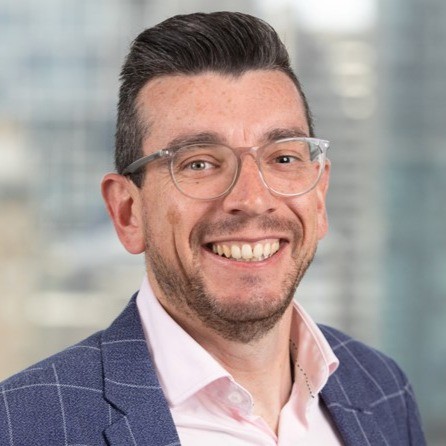
Executive Manager Advice Services at Industry Fund Services
Adrian Gervasoni is a financial services executive and leadership advocate who believes the strongest organisations are built by helping their people succeed. As Executive Manager of Advice Services at Industry Fund Services, he has spent his career developing member-focused advice models that make financial guidance more accessible, practical, and impactful for Australians.
Passionate about purpose-driven organisations, Adrian is known for putting people at the centre of strategy. He believes organisational performance is directly linked to leadership, culture, and creating environments where individuals can do their best work. That philosophy continues to shape his own leadership journey as he invests in developing the skills to better serve the people and teams around him.
Throughout his career, Adrian has been a prominent voice on the future of financial advice, member engagement, and service design. He has spoken at industry conferences and policy forums, championing more human-centred approaches to advice while encouraging funds to rethink how they support members throughout their financial lives.